Ours is an age in which everyone (online) may look up everything (OSINT) for any purpose evil or good at any time. For years now and living a “life online”, I have asked myself with so much “content” available through a fancy television screen, where to dwell? Add an earnest “why?” In the coverage of conflict–or curiosity about it–from the web’s second row seat to history there are of course the dots between events and places, the inflection points newly minted in a year–or a week or day–and the things a generation may–or must–never forget, e.g., the Rubicon, Auschwitz, Pearl Harbor, and 9/11 of their youth, but what is the choosing, clicking, scrolling point for the mind at the monitor?
For a small portion of the world beyond basic needs–cash flow is good, discretionary time is what we have, abundance in some measure small or great–the point becomes interesting. A modern Muslim woman, Qanta Ahmed asked me on Facebook decades ago (so it feels) after having registered her account, “What now?” My answer had been “Good influence.” I believe she has done her part–and I mine.
What now?
The answer for me has been one person’s diplomacy. The opportunity to read foreign newspapers in English, to make friends nine thousand miles away who would become better known than the neighbor in the apartment on the other side of the office wall–but for whom one could do nothing in a pinch–would build out one’s social media community. That was back in the Facebook uptake era. Then along came everything else and, well, X marked the spot!
And X has been the spot for responding to power and the tensions between the ambitions and attitudes of some wealthy, the arrangements made by power medieval–as well as brutal and unconscionable–and the aspirations and values of a nation blessed with valuing its own humanity and related dignity, freedom, and security. And then along came Donald–and DOGE–and the emergence of fuzzy philosophers dreaming of Tech Bro empires and new relationships between a plutocracy of programmers and the needs and wants of comparatively hapless consumers of “content” and other stuff.
The heady early days seem to me no longer new and novel–not even the “Tube” sites of the flesh trade–and all of the governments in attendance (I’m sure) watching decision patterns and trees for even that.
Ain’t it grand?
It turns out the “second row”–mediated–seat to history may be as well a space cordoned (almost) from life, but then even souls living through their screens have to step away and step out for fresh air and a good restaurant now and then.
Softshell Crab Sandwich, The Grille at Runways, HGR, Hagerstown, Maryland, May 2, 2026
And now what?
X has become a daily battle with bots, trolls, and indefinite fake names weighing in from their VPN locations (no doubt), and potentially for purposes as insidious as their being unknown and possibly unidentifiable. Then too, especially for me, there’s been the hash slung repeatedly toward every pair of eyeballs who didn’t get it — or believe it — on the first round: #AmericaForSale; #AmericaUnderAssault (good entry: welcome to my world!) all the way to where we really are (so I believe): #StateCapture / #StatePiracy. The epiphanies no longer leave me breathless but rather yawning it all back for having been repeated too often for too long.
Shall there be here a “Dining for Diplomats” section for the Washingtonians (who really may be diplomats)? And what happened to the sound track? America . . . Born in the USA . . . The Secret of Life . . . . Everyone of us — Americans — has his own. That’s our freedom . . . our individualism . . . our choice to choose how we grow our persons inside and out. Upstairs? Tabulation. Tell the universe what you want — Amazon will have it slipped into your shopping experience right soon.
With the #PhantomOfTheSoviet playing a fading devil and #IllTrumpolini providing an object lesson in #MalignantNarcissism — and this blog becoming weirdly hybrid with hashtags — Qanta’s “What now” has transitioned fully into two major questions, one public and an echo from history: “What is to be done!?” (Query AI on the famous Russian question). And the other personal: “What am I doing here? What’s my hunt, my role, my mission, my purpose? So I jump (virtually) in the air shaking my fists over my head before a distant, virtual, absent–from my space but not cyberspace– Michael McFaul who has posted a note on X expressing hope that the next President will be different without fully comprehending the challenges posed by having a piratical feudal-medieval mafia chief in the wheelhouse of the American Ship O’ State promising his portion of the Christian base relief from elections forever after: ““It’ll be fixed. It’ll be fine. You won’t have to vote anymore my beautiful Christians . . . in four years you don’t have to vote again, we’ll have it fixed so good you’re not going to have to vote.”
Putin is an enemy of freedom and a supporter of dictatorship. That's why he invaded Ukraine and is aiding Iran.
The U.S. should be a friend of freedom and a supporter of democracy.
Trump doesn't understand this basic mission for our great country. I hope future leaders will.
While true, “Trump doesn’t understand this basic mission for our great country,” he understands being a chief with his own system of private patronage (#PPS on X) and all the methods attending criminally ruthless power from blackmail, bribery, and intimidation to the promising of generous rewards in exchange for loyalty, obedience, and silence.
What Donald Trump does — and what he has done to take America down — has been as obvious as it has been ugly. Check the list for his large targets or mishaps with tariffs: American agriculture, counterintelligence, election security, health, humanitarian aid, justice, natural resources, etc.
Whine it out on X, fashion the barbs that make the snark, send hints to those who know them, perhaps, but come forward from the curtains keeping the darker realities out of sight, the reckless, unresponsive, upside-down, and surreal Trump and his Trumpian Theater will just get right on to the next dumb move, the sort now paving the way toward national financial arrest, debilitating desperation, probably related crime (we shall see), and the unholy trinity leftover from Soviet post-Soviet Russian barbarity and stupidity: enserfment, gulag, and Soviet-style totalitarian surveillance. ICE will need work; the private prison system may appreciate a little expansion money; and the technology for observing or tracking everyone at all times might well exist —
Creating detailed portraits of Americans based on government data is not just a pipe dream. The Trump administration has already sought access to hundreds of data points on citizens and others through government databases, including their bank account numbers, the amount of their student debt, their medical claims and any disability status.
Mr. Trump could potentially use such information to advance his political agenda by policing immigrants and punishing critics, Democratic lawmakers and critics have said. Privacy advocates, student unions and labor rights organizations have filed lawsuits to block data access, questioning whether the government could weaponize people’s personal information.
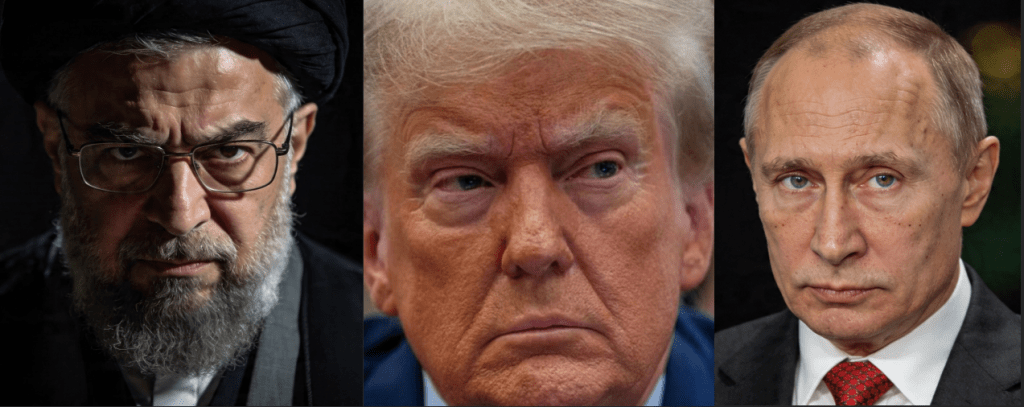
Archaic, Criminal, Irrelevant, Medieval
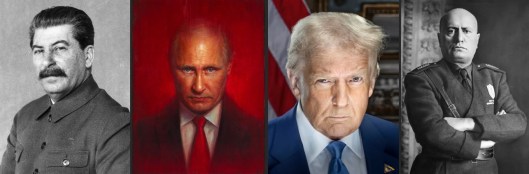
My X-ing has been for some time a routine . . . another program involving a repetitious rollout of arguments, memes, and related talking points. Let’s leave this most egregious of observations here: the above faces defend and reflect in their game-faced hardness an outlook better fit with the worst barbarities of medieval power and related treachery than with anything like modern compassionate, responsible, responsive, and trustworthy governance. Whatever the wreckage each has left or will leave behind, they are together representatives of all that belongs behind us and none of what any should want waiting in the near future.
The good news: Russia is collapsing. It’s banks feel the heavy squeeze; it can’t abet the defense of any alley while it falls; and it is watching its Soviet / post-Soviet spheres of state control and influence contract and dissolve.
The bad news: Donald Trump has initiated adverse processes that will coarse through the networks of absolute power, crime, and terror for years to come. Worse–and in the interest of his own grasp on power–he has stripped away some portion of America’s most accomplished, experienced, and knowledgeable counterintelligence / counterterrorism professionals and put in their place favored unqualified associates, family, and, in general, sycophants. He may not be solving the nation’s defense and security challenges as much as defining it as himself, i.e., another paranoid-delusional dictator calling critics criminals while acting to aggrandize and enrich himself at every opportunity.
TrumpPutin have never been about the interests of their respective states but rather #TheMoney and the development of their own power to alter, erase, and shape public reality for their own emotional defense. The two have been life-long cowards and criminals and have made their marks political criminals–as thieving dictators–beyond the reach of their own societies.
For #Americans, #AmericanPoliticians, and #AmericanMilitaryAndPolice, most to all in each class have sworn on oath to defend our #AmericanConstitution and related principles and values. It would seem the same have now to rise to the challenges presented by a rogue #AmericanPresident.
Below: the archaic; the criminal; the hated; and the standard bearers of a discarded feudal past wholly without virtue, for they are neither of them noble or even good.
And then the images shown on the X post.
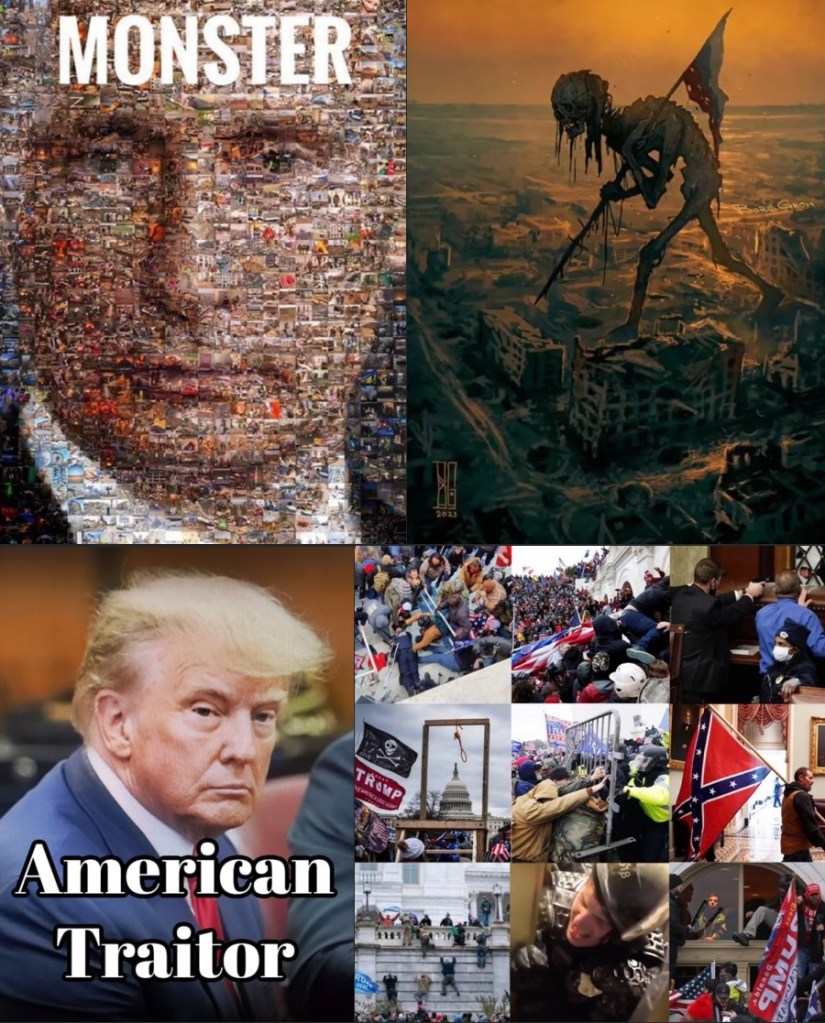
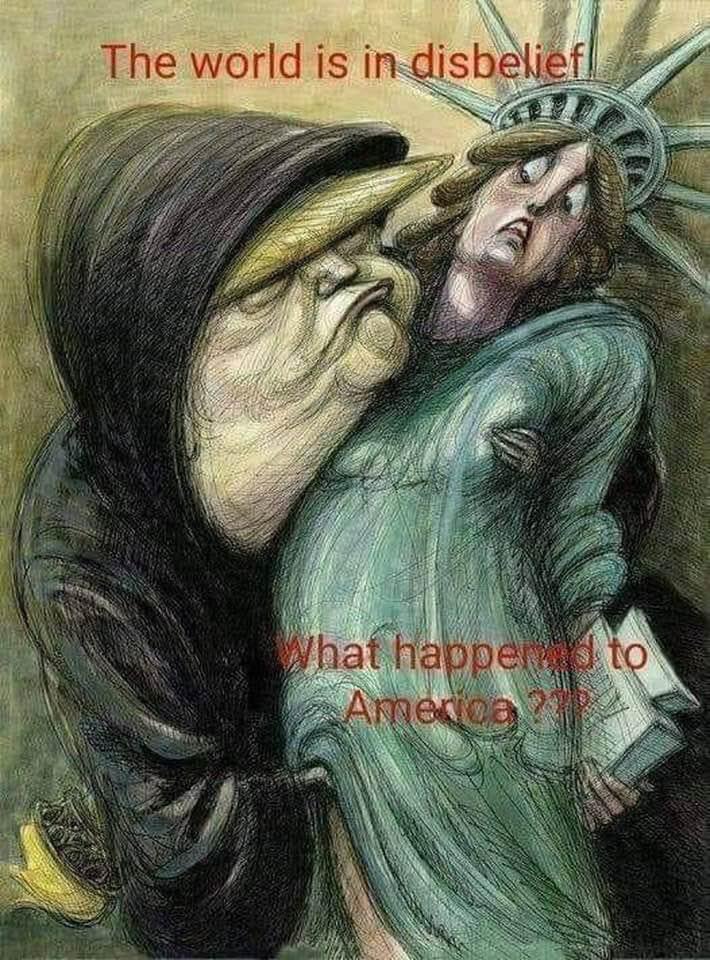
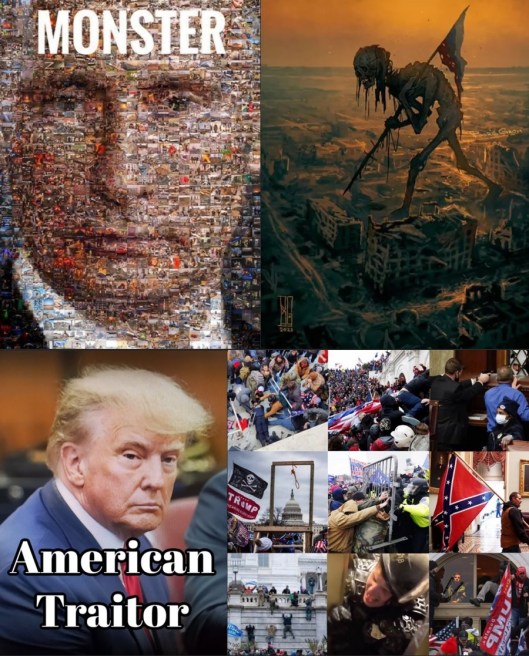
Here: Putin over Trump as each criminal and political criminal will be portrayed in Russian and American eternal memory; a tile popular when Trump’s Georgia election fixing case was hot news; an illustration detailing the locations at Mar A Lago of boxes loaded with classified, secret, and top secret Federal government documents to which Trump had not been entitled; and the last a popular meme illustrating Trump’s rape of America. The truth about Mafia Don: he has been all his life a privateer associated with organized crime. Most notable for his apprenticeship at the git-go: mob lawyer Roy Cohn; mafioso Fat Tony Salerno.
You know the Russian's question and how Russians have answered it (twice, and with awful results). Let's make it an American question: what is to be done?#AmericanMilitaryAndPolice take note.
The two posts are presented here in plain text in reverse order,i.e., the latest appears first.
*
“Clearly, the US lacks the rule of law for people of wealth & power. How can that be accepted?!”
It’s not accepted, #AndersÅslund. #WeAreAmericans and have been hijacked (#StateCapture / #StatePiracy). I believe we have been boarded, commandeered, disarmed, and now looted (as #Putin has done to #Russians). Our corruption and our wealthy–and the two may be related–have paved the way for the criminal in office.
NATO #Article5 appears to have been born in the more conventional and observable conventional context of “denied territory”, but this #AssaultOnAmerica comes through perhaps extremist and rogue financial forces. #EyesWideShut? Our Catholic-majority Supreme Court, the dumb permit given the President by Justice Roberts, the long #KGB #TrumpPutin relationship and #Moscow’s #ActiveMeasures appear to have worked. The growth of the Russian oligarchy beneath Putin’s favored associates and family first #PrivatePatronageSystem and here in #America the arrival of a class of super-wealthy willing to pay tribute to Trump suggest the worse.
The wages of greed coupled with world’s most advanced science and technology . . . . it amounts to an invisible hell supported by occult wealthy and led by a deranged criminals versed in mafia rules.
The spirit of the #AtlanticAlliance – of #NATO – should be brought to bear because we did not vote–not even the most strident of #MAGA voted–to destroy our modern #AmericanSecularDemocraticRepublic.
I have no passage through to power except here on X, so I hope some will take my note seriously. J. S. Oppenheim / James S. Oppenheim – https://conflict-backchannels.com/.
*
You know the Russian’s question and how Russians have answered it (twice, and with awful results). Let’s make it an American question: what is to be done?
Why has Trump’s year of negotiations been the deadliest for civilians in Ukraine since the full-scale invasion? The number of deaths and injuries has increased by 31 percent compared to the previous year. Why did Putin not allow himself such brutal strikes on civilian infrastructure under Biden, whom Trump calls “weak,” but totally destroys peaceful cities and disregards the “strong Trump”?
TrumpPutin, an #IgnobleNobility, may represent our inability to contain #FeudalMedievalMafia. The interests of #America and #Russia aren’t even in the play between the two #DelusionalParanoid #PoliticalCriminals who believe the whole world against themselves and have acquired through the fraud, force, and coercion — or blackmail and bribery, reward and punishment — of each his own #PrivatePatronageSystem (#PPS) sufficient power and wealth to destroy the cultures — not save any! — of the #OpenDemocraticSocieties of #TheWest.
Key: #MalignantNarcissism. Thematic: #CriminalVLawful; #EvilVGood!; #MedievalVModern.– Note suggested for #AmericanMilitaryAndPolice and for #MAGA.
“Negotiations” between #TrumpPutin over #RussiaVUkraine appear without character, decency, integrity, or strength.
I present you with #CowardsAndCriminals.
*
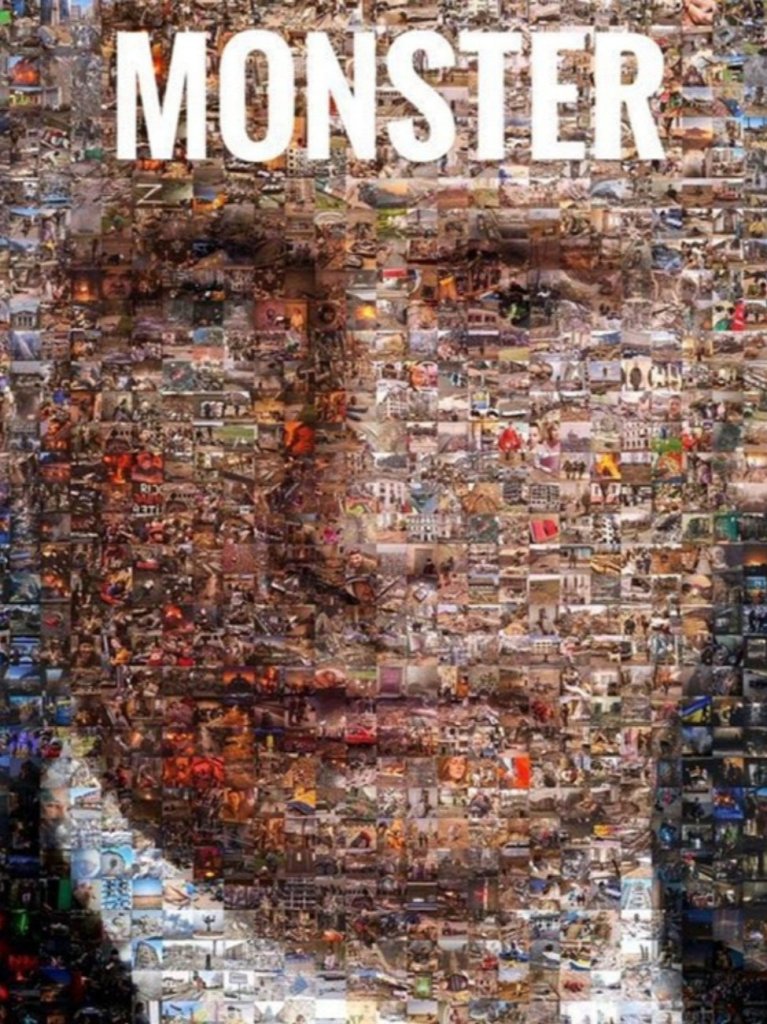
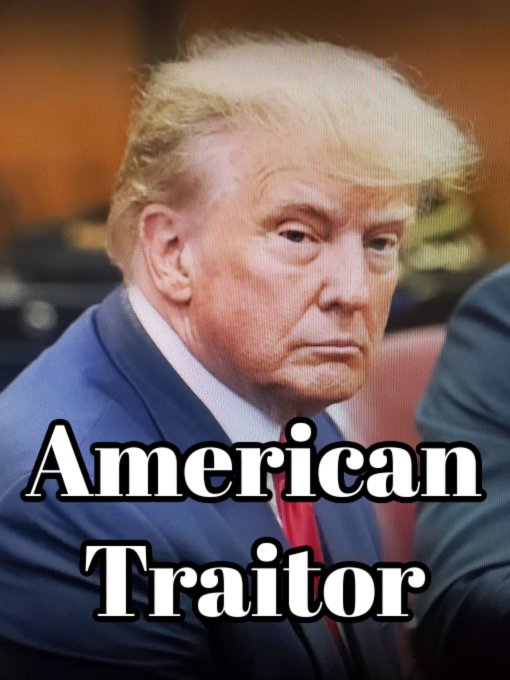
Access X for the images of the billboard; the Russian monster and American traitor; the four dictators–Stalin, Putin, Trump, Mussolini; and the evil standing together in Alaska.
Having criminals in power in both Moscow and Washington bodes ill for the world while sustaining within it the most horrific habits and nightmares of the past. The two wealthy and their tribute-paying cronies have put on the display of themselves as neither better nor more than feudal-medieval mafia who have the wealth to view themselves as feudal-medieval mafia and to behave in privacy and in secured secrecy criminally with impunity. That’s the “secret” coming out, finally, through the guarded spilling of the Epstein files.
So in addition to a Trumpian coup intended to install an ignoble nobility in power in Europe and North America, what have we been witnessing via the criminal Trump-Epstein relationship? A few would say male bonding through mutual affirmation of the deepest and most violent of lawless primitive indulgences, i.e., the most vicious libertinage. In that vein, Stanley Kubrick’s film Eyes Wide Shut has been found to serve a perhaps quiet and seething reflection on evil. Here are three suggested video, two focused on Kubrick’s courageous (in fact) efforts to permanently imprint on the cave’s wall a world as rare and evil as could be imagined, and one detailing a portion of Jeffrey Epstein’s bottomless pit of sadistic and soulless deviltry at Zorro Ranch –>
In political science, two measurements may determine the strength of political organizations from tribes to states: political coherence and political cohesion.
Do we agree on who we believe we are and with that our sense of mission and purpose in existence?
Do we exist together in good times and bad, in our holidays–and in war or in the depths of distress?
Antagonists — and all political systems have them — weaponize language to break the bonds of a healthy comity through lies — baseless accusations, defamations, and slanders; fabrications, framing, and frame-ups; false narratives and omissions of fact — that do their corrosive work. Promises become doubtful; trust between partners erodes; cultural and social reality even become fair game for “alternative facts” (there are none but fraudulent claims) and the endless invention of fictional speculations and theories. Anything could have happened but what did may meet with deflections of attention and delusional denials of truth especially where the antagonist has committed crimes.
Countermeasures and defenses against disinformation–all lies are that–are but two: empiricism and integrity.
As a Eurasian antagonist to the West, specifically the western civilizational experience characterized as “Greco-Roman, Judeo-Christian” in the cultivation and expansion of populations emerging from the Mediterranean Basin in northern and western expansion, Russia has relied on an eastern barbarism in control, financing, and force for its accretion of subjected populations across centuries with itself contracting and expanding with the fortunes of war. It knows itself as having once been a tribute-paying province of the Mongol Empire. Here is an AI report prompted by the query, “Mongol Empire, tribute from Russian principalities” –>
Following the 13th-century Mongol invasion, Russian principalities became vassals of the Golden Horde, paying heavy, regular tribute (in silver, goods, and people) to avoid destruction. This “Tatar Yoke” lasted until 1480, with Moscow eventually dominating tribute collection, which helped consolidate its power.
Key Aspects of the Mongol Tribute System:
Administration: Initially collected by Mongol agents (basqaqs), the system shifted to using local Russian princes to gather the tribute by the 14th century.
The Yarligh: Princes required a yarligh (patent of authority) from the Khan to rule.
The Role of Moscow: Moscow’s princes, particularly Ivan Kalita, secured the right to collect tribute for the Mongols, using this position to enrich themselves and increase their influence over other principalities.
Exemptions: The Russian Orthodox Church was generally exempt from paying taxes, which allowed it to grow in power.
End of Rule: The burden of tribute continued until 1480, when Ivan III refused further payments, culminating in the Great Stand on the Ugra River.
The system of tribute and political dependency heavily influenced the development of the Russian state, fostering centralized, autocratic power.
One may see in today’s assault on the west through a subaltern in the United States the sensibility of Vladimir Putin’s intent to establish a new nobility–the most wealthy of an empowered class–to keep themselves fat off the creativity, entrepreneurship, and labor of Europe and North America. The modern expression of that desire in Ukraine had been looting through skimming the profits of firms through Putin’s henchman Viktor Yanukovych. For America, some similar role would seem in store for Donald Trump and his favored associates and family. Call it “Rule By The Rich”–Americans would be subjected to the capricious desires in greed and power of a class determining their fate with impunity. The permit to lie to the people without apology would likewise seem a part of the Trump-Putin program in autocratic and absolute power.
The Functional and Political Purposes of Lies
Lies have always been told to hide something or to get something. Cover the crime or flatter the boss, the dishonesty always has at least an intended payoff. The emotional motivation for lying has been well explained on BackChannels and may for present purposes be expressed in this modular form addressing “Malignant Narcissism”:
Signal: delusional, grandiose, messianic ideation absent of normal boundaries and limits, i.e., the parameters of normal conscience.
For the purposes of political psychology, the malignant narcissist fears public humiliation and shame, something experienced as a child (“Narcissistic Mortification”) and feels compelled to project his image in power as unassailable, courageous, and heroic.
There is beside the emotional motivation additional practical compulsion to lie on behalf of the possession of power, and that is to sustain one’s most loyal associates and family in sharing the wealth associated with it and otherwise keeping all outside the autocrat-narcissist’s circle of power in sharing in power themselves. Those, after all, needs must be subject to the will of the powerful and treated as the property of the state as without inherent value but for their lesser contributions to the wealth of the ruling power’s domain.
What may lies do for installed feudal-medieval mafia and their networks?
Confusion
The “firehose of falsehoods flooding the zone” — or some such — has the effect of confusing issues by making certain the vulnerable (to lies) have no rational anchor for argument while faith alone proves insufficient for political judgment and navigation.
Among the most destructive compendiums of bullshit: conspiracy theories that overwhelm disbelief with disingenuous and endless invention. The false becomes the truth; the irrational–the real; and the suggestion may for a few provide sufficient cause for violence. The sophist’s mind virus may inspire otherwise inexplicable crime e.g., “‘Pizzagate’ Gunman Sentenced to 4 Years in Prison”, NPR, Merrit Kennedy, June 22, 2017; planted in the minds of incurious thousands or millions–similar bundles of crazy would seem to seed cultures — actually, cults — detached from reality and reason altogether.
“Supply” — “Unlimited Narcissistic Supply” — or reward for the malign narcissist may be defined as public adoration and validation without end. For emotional as well as practical reasons (like being arrested by a righteous opponent), few dictators relinquish power of their own accord (only Pakistan’s Pervez Musharraf comes to my mind as having the decision to make, albeit it under state and international pressure, and then making it in favor of a transitional democratic mode–even so, and this after leaving Pakistan for London and Dubai, he returned to Pakistan to return to politics. got arrested for unresolved grievances, fled court, and for emergency medical leave again ended up in Dubai).
Political repression in Russia under Vladimir Putin has intensified dramatically, particularly following the full-scale invasion of Ukraine in 2022, evolving from targeted, selective pressure into a systematic, widespread crackdown that observers describe as the most severe since the Soviet era. The regime has effectively eliminated independent media, banned opposition organizations, and criminalized dissent, with over 1,700 known political prisoners as of late 2025—a figure surpassing the number of political prisoners in the Soviet Union in the mid-1980s
Someone must have added the “t” for fame isn’t always fleeting but for some positively fleeing and leaving behind only infamy.
For Putin and others of his vulgar KGB class, the game has turned to arresting corrupt others (state surveillance pays off!) accompanied by the confiscating of their cash (for a rough visit on that subject see Jason Jay Smart’s YouTube videos — e.g., “Putin’s War Cash Grab: $28B SEIZED Inside Russia”) as the Russian state collapses in relation to the disruption of its oil revenues and oil industry and the related distributions that support downstream business and industrial processes. When the chaos, destruction, looting, and treachery abates in Russia, The Money — my guess — and its owners will move into Europe or South America (wherever) to live out their lives as pseudo new colonial investors.
Donald Trump has a state that continues working despite his efforts to discount, overlook, or pervert its Constitution, customs, and laws to suit his exclusive grip and will while his appearance as a dictator — an evil man, an incompetent and vile ignoramus drowning in his own accumulating disasters — grows by the day. He has replaced the best of Federal executives and officials with incompetent zealots loyal to himself, degraded the nation’s counterintelligence and defense agencies by similarly removing any capable of threatening his own authority — add the professionals experienced in investigating him and his mob — and has made the nation — for the first time in history — a doubtful partner in the defense and promotion of compassionate and modern democratic societies worldwide. He appears to view the nation as he imagines himself: embattled and victimized — and the only way out of his miserable condition is to rise to the control of all that would make him feel small again. For what he cannot reason, he reverts always to coercion and force — or, confronted by greater power than himself, he backs away.
It’s ironic that the two world leaders who would most demand for themselves the accolades and approvals of the world — that Nobel Peace Prize for Donald! Respect from the global defense industry for exploring “Hybrid Warfare”, “Gray Zone Tactics”, and “Hypersonic Missiles” for Putin — know themselves as criminals most of all as each holds on to power through coercive methods and the most callous and vain attempts to manage his bloodied ugly image for posterity.
The mirroring couple #TrumpPutin appear to be between states as the criminals, malignant narcissists, and political criminals each has become. Trump, at this point, might wish to be free of the boss of the #RussianMafiaState (one may imagine the reasons for that) and both in the… pic.twitter.com/0RtFXNnF27
The tweeted text follows (with a few hash marks replaced by standard typed English and adjustments for sense) so as to give expression its more persistent showcase in online publishing (a tweet may be noticed and read but briefly as X compiles rapidly and destroys focus as efficiently as it confronts its audience with virtually limitless attention-seeking stimulus).
***
The mirroring couple Trump and Putin appear to be between states in their relationship. Trump, at this point, might wish to be free of the boss of the Russian Mafia State (being blackmailed by kompromat might account for that), and he’s been presented with an opportunity involving the post-Cold War clean-up of the former Soviet/post-Soviet spheres of alliance, control, and influence and the severing of the link that has been for a long time Moscow-Havana-Caracas.
While Donald may expect accolades for his conquest of a former Soviet communist satellite, I think he’s proceeding from a different compact with Putin involving the feudal-medieval mafia mentality each has come to represent and he would just as soon make a “gangster’s paradise” out of his invasion of Venezuela. That would help make sense of his low-to-high pattern in pardons of criminals who have injured the United States (e.g., the January 6, 2021 insurrectionists; the recent pardon of drug kingpin Juan Orlando Hernandez) and his penchant for locating and targeting mineral wealth from Greenland to Ukraine and working “deals” in which he involves business associates and family in a process that may be referred to as the development of his own personal empire.
Is he betraying his “handler” Putin?
While it looks that way at a glance, Trump in fact may be turning East-West Rivalry on its head and setting up to rule and plunder the wealth of the western hemisphere while leaving Europe and its interests to his rival.
How Americans view the Trump-Putin relationship (mirroring) may be tempered by both political bias (partisan drift) and the American constituency’s general detachment from foreign affairs and international relations. Up to this point, America’s professional business and political managers have understood their having a uniquely American mission from the 20th Century perspective at least. As an American People, the same have negated the power of kings, fought fascism and imperialism worldwide, and tempered totalitarianism as understood from witness of leaders pledged each to the support of his ruling Communist Party.
In fact, the winning of the Cold War had been framed as having beaten Communism, not a practical and ruthless KGB driven and managed police state that could be turned toward serving a dictatorship– a private patronage system–devoted solely to its own aggrandizement, ambition, greed, and security.
So this round is different.
Trump and Putin represent an archaic criminal mentality associated with the malign narcissism and related emotional needs of each, i.e., the equivalent in outlook of what would be today criminal medieval powers engaged in continuous competition for territory and tribute, and then–with the concept of modern feudal-medieval mafia established–related unbridled and unhinged methods in power and enterprise.
***
About the Art
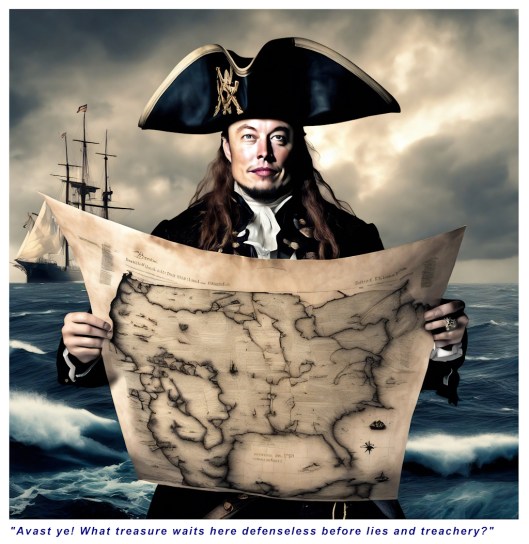
The bookends tell in part the Trump-Putin story as one dates to 2016 and has since become an iconic as well as ironic statement about the two statesmen. The other has been captured in relation to Trump’s second-term meeting of the two in Alaska. In the way of a fast-paced meme-spilling web, the composites between reflect, of course, my conclusions about the two and their archaic views of dominion and sovereignty–and both lawless men have reserved for themselves as principle a deeply archaic, deranged, and mentally and morally sick “right” to destroy with their power persons and property alike with impunity. One has ordered the piloting of missiles into apartment buildings and malls; the other threatens to take over the western hemisphere while fueling his own corrupt system of private patronage. Neither should represent anyone’s future governance–not for Russians and never (again) for Americans.
Related to Archaic Leadership and Malignant Narcissism
I’ve whittled related political science and political psychology (#PoliSciPoliPsy) down to this module for X-ting (X-ing . . . whatever)–>
Signal: delusional, grandiose, messianic ideation absent of normal boundaries and limits, i.e., the parameters of normal conscience.
Russia’s Central Bank has recently started selling physical gold from its reserves for the first time as part of Finance Ministry operations to cover the national budget deficit, which has widened due to the ongoing war with Ukraine and Western sanctions.
Key Details on Russia’s Gold Sales
Purpose: The primary reason for the gold sales is to generate rubles and cover the state budget deficit, particularly as oil and gas tax revenues have dropped.
Mechanism: Due to increased liquidity in the domestic gold market, the Bank of Russia is now able to conduct market operations involving the sale of physical gold in a manner equivalent to selling Chinese yuan to balance the National Wealth Fund (NWF).
Volume: The exact date sales began and the current volume have not been specified by the Central Bank. However, data indicates that the Finance Ministry has sold over 232.6 tonnes of gold from the NWF since the beginning of the war, reducing the fund’s gold holdings to 173.1 tonnes as of November 1, 2025.
Context: This marks a significant shift for Russia, which had been a major buyer of gold for years to diversify its assets and reduce dependence on the U.S. dollar, especially following the 2014 annexation of Crimea. The U.S. decision to freeze Russia’s foreign exchange reserves after the 2022 invasion has motivated a broader trend among central banks (including BRICS nations) to acquire more gold and move away from the dollar.
Russia’s Overall Gold Reserves
Despite the recent sales from the National Wealth Fund, Russia maintains significant total gold holdings.
Total Reserves: Russia holds over 2,300 tonnes of gold in its total national reserves, making it the world’s fifth-largest holder.
Strategic Shift: The country had aggressively built up these reserves to act as a buffer against sanctions, a strategy that has partially insulated its economy.
Domestic Market Focus: Sanctions prevent Russia’s Central Bank from buying gold on international markets, so domestic purchases from local miners have been a key part of its strategy.
Related Trends
Public Demand: Russian citizens have also been buying record amounts of physical gold to protect their savings from inflation and sanctions, with the government encouraging this trend by scrapping the Value Added Tax (VAT) on gold bar sales to individuals.
Sanctions Evasion: There have been international calls, notably from U.S. senators, for the State and Treasury departments to crack down on Russian gold sales to prevent the funding of its military operation
As the Phantom of the Soviet, Putin and his “New Nobility” project appear to be fading. Most clearly, he cannot today defend Russia, her field operations, her people, and not even select cities from Ukrainian payback. Many within Russia will find themselves surviving this winter in the cold and dark as services fail and the machinery and repairs wanted may not be available as required.
Rarely have so few, seemingly inconsequential words generated so many consequential ones.
In a mere 109-word paragraph tucked away in an autobiographical collection of interviews published in 2000, just as he ascended to power in Russia, Vladimir Putin tells a nightmarish tale: Once, when he and his friends were chasing rats with sticks in the dilapidated apartment building in St. Petersburg where he grew up, a “huge rat” he’d cornered suddenly “lashed around and threw itself at” him, chasing the “surprised and frightened” Putin to his door before he slammed it shut in the rodent’s face. For Putin, it’s a parable: “I got a quick and lasting lesson in the meaning of the word cornered.”
Might Putin try to erase the memory of the world by setting off a nuclear Armageddon?
Given Putin’s association with Malignant Narcissism and related ramifications, it appears he may need to be stopped by the mutiny of his remaining admirals and generals in unison. By Russian own nuclear doctrine, he cannot launch a nuclear warhead without military cooperation. According to AI today:
In Russia, the President makes the final decision to use nuclear weapons, but military commanders have control over the launch. The Cheget briefcase connects the President to the strategic command-and-control network, transmitting launch orders to the General Staff. The General Staff then gives authorization codes to the commanders who execute the actual launch.
The process for nuclear launch
Presidential decision: The President, as the Supreme Commander-in-Chief, makes the final decision to use nuclear weapons based on Russia’s doctrine.
Command and control: The President uses a device called the Cheget to send the launch order through the Kazbek command and control network.
Military authority: The Cheget transmits the orders to the General Staff, not to the individual weapons commanders.
Execution of the launch: The General Staff then issues the necessary authorization codes to the individual military commanders who have the authority to execute the launch procedures.
For Russians, the present state-of-affairs must seem both puzzling, at least (given the Soviet Era hangover having to do with propaganda and totalitarian control), as well as foreboding in light of Ukraine’s demonstrated ability to attack any vital state asset in the Russian land mass contributing to the state’s defense, economy, and industry. With the initiation of the selling of gold reserves, Putin has more or less signaled the beginning of the end of not only an intolerable venture into and toward Europe but his inability to resist the war being brought home to none other than himself–and it may be his own people who do it.



 BackChannels