• Home
  • About
  • Concepts, Coins, and Terms
    • Anthropolitical Psychology
      • Civilizational Narcissism
      • Conflict – Language Uptake – Social Programming and Scripting – A Suggestion
        • Language Uptake – Programming – On Learning to Listen
        • Mouth –> Ear –> Mind –> Heart System
        • Social Grammar
      • Facsimile Bipolar Political Sociopathy
      • Malignant Narcissism
      • Narcissistic Scripting
      • Normative Remirroring
      • Paranoid Delusional Narcissistic Reflection of Motivation
    • FTAC – “From The Awesome Conversation”
    • God Mob
    • Intellectual Battlespace
    • Islamic Small Wars
    • New Old Now Old Far Out and Lost Left
    • Political Spychology
    • Shimmer
  • Library
    • About Language
    • Russian Section
  • Comments and Contact

BackChannels

~ Conflict, Culture, Language, Psychology

BackChannels

Category Archives: Journal

A Quiet 9/11 for BackChannels

11 Wednesday Sep 2013

Posted by commart in Journal, Library

≈ Leave a comment

Weather: mid-Atlantic, late summer, sunny and hot.

Reading: Fragile Empire: How Russia Fell In and Out of Love with Vladimir Putin: Ben Judah: 9780300181210: Amazon.com: Books

Seen on Facebook Before 8:30 a.m.

http://www.israelvideonetwork.com/i-believe-a-911-tribute 9/11/2013

9/11: America’s Unfinished Business – Michelle Malkin – Page 1 9/11/2013

2 Millions Bikers to DC (Facebook Page)

Around the Web

CNN.com – September 11 Memorial

Explosion damages Libya’s Foreign Ministry on anniversary of 9/11 attack on U.S. Consulate – NY Daily News

Opinion: Jihadist terrorism in America since 9/11 – CNN.com

12 years later, horrors of 9/11 shaping American opinion on Syria, Middle East – Indian Express 9/11/2013

Honor September 11th: National Day of Service and Remembrance | The White House 9/11/2013

Column: 10 changes since 9/11 : Opinion 9/11/2013

______

You can surf the web too?

How about that!

And that’s good reason for me to take it easy on the chatyping all around — blogs, correspondence, Facebook — and immerse in a good book.

# # #

BackChannels – New Feature – Frequently Cited or Recommended Reading

11 Thursday Jul 2013

Posted by commart in Journal

≈ Leave a comment

We’ll see how the new section crowds up, but it will be a relief to me to have one page to which to link when I mention, say, Dan Everett and why he matters in the realm of “conflict, culture, language, and psychology.”

Also added this morning:

“Lee Smith’s Comment on ‘Media Warfare” in the Middle East”

“On Being a War Journalist — Francesca Borri in Syria – 7/1/2013”

I also got the content of “Coins and Terms” on to separate pages, the better to introduce more of the same, but different.

# # #

Abbas Zaidi’s Wicked Humor and Magical Realism

22 Wednesday May 2013

Posted by commart in Books, Journal, Library

≈ 1 Comment

Tags

Abbas Zaidi, fiction, literary, literature, Pakistan, short stories, south Asia

Zaidi, Abbas.  Two And A Half Words And Other Stories.  Gowanus Books, 2012.

What might it like to live in an atmosphere rife with bigotry, fear, and hypocrisy accompanied by the author’s and reader’s own cackling laughter?

Slip your mind into Abbas Zaidi’s slim and thoroughly delightful, also wondrously transgressive, first volume of short stories inspired by the south Asian Muslim experience and find out.

Truly, Zaidi’s Two And A Half Words And Other Stories comes off a wickedly good trip from the first mention of “Blessed Companions of the Prophet Street” (“The Shadows”) to the pitch perfect near ending wrap-up, “On that rainy evening, the four minarets of the Shahi Mosque were standing tall in the distance surrounded by the dimly-lit alleys where the ladies of the night, their pimps, and customers were getting ready for business.  I lit a cigarette . . . .”  (“Passions of Khalifa Hakeem”).

From the title story of the collection:

What I remember them saying was that the jhalli kuri in Number 3 had lost her mind after remaining silent and refusing to eat for days.  These words had no meaning for me.  But one night I woke up screaming.  I dreamed that the jhalli kuri was standing over me.

A “mad girl”, a troubled apartment, mysteries . . . .

As this blog swims around in the area of language and politics, I may mention that the volume is not bereft of the latter but for western readers may be uncomfortably startling in its depictions.  At one point, for example, a general notes, “if the Americans want to isolate Iran, courting the Taliban and Al-Qaeda is not a bad idea” and a reporter similarly struck with grand conspiracy theorizing chimes back, “Don’t be surprised if one day a Taliban squad is found blowing up bridges in Beijing in the name of Islam but actually serving American . . . .”

Wealth may be needed to preserve the conditions in which the literary experience of the 19th Century thrived, either that or equal tolerance for impoverishment, for even reading through the dozen expertly crafted short stories contained in Zaidi’s first collection requires time away from the web and time unencumbered by other concerns — call the proper condition “leisured time”: the experience of such work becomes that of a thin but notable and latent powerful new intelligentsia.  For that set — and if you’re here, I hope you’re a part of it — such stories provide both a critique of and a map to the spirit of the world in which the author has lived.

We may never have a perfect world — God forbid it — but in Abbas Zaidi, a part of it may have given the gift of a perfect and perfectly scathing reflector and entertainer.

A Page for the In-House Library

29 Tuesday Jan 2013

Posted by commart in Journal, Library

≈ Leave a comment

Tags

conflict, home library, in-house library, library, peace, peace studies

Reference: BackChannels Library Page

My library contains about 2,000 volumes.

Should I ever get it into a house (life’s not looking so good for that at the moment), I should like to have it in one room or continuously spanning one serious load bearing wall.  Here in the apartment they’re arrayed over the studs one to three bookcases along sections of wall.

So far, so good.

I’ve gone to Kindle, which is not bad for curiosity but awfully bad for the disposition of even a small (the smallest) estate in books, and I may revert to collecting hardcovers.

While I mull that, I thought I would share here with readers a portion of what’s been imported in areas relevant to light commentary on politics.  Were the funds available, say through a big fat fairy tale of a grant (but maybe there are angels), I would have an assistant work up cards and key them for a while.  As it is, if I add a few volumes a week, just a couple at a time, that might do as well.

While items listed are here, not everything listed has been read (the infamous  “RAT” is still sitting stealthily on a speaker cabinet beside the television), and not everything read has been remembered; however, I have out of necessity become more careful about quality time with books, the distractions posed by the Internet, especially Facebook, having become so fragmenting and time consuming.

In fact, I have here the habits of a way of life, but it’s a scrambling and scrapping information-bound way of life, shifting gears always between the academic and the personal, the chatyping session on the social network and the research-and-typing session that turns out a post, and the concerns of an author (would-be, wannabe, maybe is) and those of the guy who lives in “real space” after all.  Apart from the nifty act of hauling a cogent quote onto a blog or into online chat, I’ve always found reading among the most calming and focusing of activities.

With a library in the home — not a lonesome bookcase in the squire’s office but rather 20 bookcases packed and packed along from grade school to graduate school (and sprinkled with inheritance: my father’s Durant and Le Carre collections are here, for example) and assembled for a dime on the dollar from thrift shops — it’s good not to always have too much burden in the way of other distractions and indulgences.

There’s not too much on the page as I type here this Tuesday afternoon in late January, only mention of five volumes, but there’s more where they came from.

READING NOW

Servadio, Gaia.  Mafioso.New York: Stein and Day, 1976.

Collection

Political Psychology

Fromm, Erich.  The Anatomy of Human Destructiveness.  New York: Holt, Rinehart, and Winston, 1973.

Post, Jerrold M.  Leaders and Their Followers in a Dangerous World: The Psychology of Political Behavior.  Forward by Alexander L. George.  Ithica: Cornell Universty Press, 2004.

Regions and States

CENTRAL ASIA

Cohen, Stephen Philip.  The Idea of Pakistan.  Washington, D.C.: Brookings Institution Press, 2004.

Rashid, Ahmed.  Descent Into Chaos: The United States and the Failure of Nation Building in Pakistan, Afghanistan, and Central Asia.  New York: Viking, 2008.

” . . . the most common bed-making accident . . . .”

21 Friday Dec 2012

Posted by commart in Journal

≈ Leave a comment

Tags

accident, experience, literary, reading, web, writing

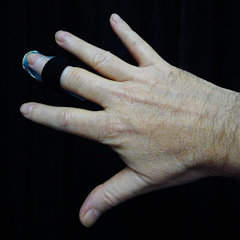
I am reading Bernard-Henri Lévy’s Who Killed Daniel Pearl?, a volume well reviewed in 2003, and shall probably go on to Robert S. Wistrich’s A Lethal Obsession: Anti-Semitism, for Antiquity to the Global Jihad, for, quite accidentally, the ease of typing faster than I can speak — about 80-WPM if hot — has been interrupted by “the most common bed-making accident”: jamming an undersized fitted sheet beneath a mattress, only finding the fist, middle finger (yes, that one) foremost, jammed between the mattress and sloping leather foot-board.

Splinted Injured Long Finger, Hunter Hill, Hagerstown, Maryland,It was a postmodern accident in a way: my insurer’s “urgent care” was an hour and two counties away, much aligned that with the nation’s health care imbroglio, so I got the busted digit figured out using digital resources online.  With the assistance of retired local  doctors and active pharmacy clerks — while in the drugstore and on the line to Kaiser, the wait for advice alone was 30 minutes, so nix that service too — and the presence of very good comprehensive pharmacy in the vicinity, I got the skinny on 3M “micropore” waterproof tape, useful splints, and the best advice from former patients (same thing): “Six weeks, don’t monkey with it!”

It took a while for the foam bed of the splint to collapse, the tape technique to get simple, the necessity of holding that knuckle down  to become clear (“Mallet Finger” it looks like, and I want the tendon — now the two parts of it to grow back long on to the shortest scar tissue possible) and am now in the “lessons learned” portion of the first phase (e.g. wear a mitten outside because the metal splint will freeze the tip of the affected finger; also type flat fingered: in fact, any curling action needed — start with lifting a frying pan — the left hand gets the work).

So I am in reading for long hours instead of hanging out here blogging or chatyping on Facebook.

This may turn out a blessing in disguise: writers need long hours, and long hours with a book becomes what reading can and should be: an alternative wakeful experience in depth.

There is nothing like it.

I may go so far as to say the sinking into long reading stands a fair chance of defragmenting my own drive and with it my approach to time and freedom.

When the splint comes off in mid-January, I’ll be back, busy, and available for editorial and research tasking.

In the meantime, I cannot tell you how much one’s hand needs one’s chief offending finger to do the simplest things . . . .

Still, it’s not like it’s the end of the world.  😉  😉

Salman Rushdie Reads from His Memoir, ‘Joseph Anton’

12 Friday Oct 2012

Posted by commart in Conflict - Culture - Language - Psychology, Free Speech, Library

≈ Leave a comment

Tags

author, Joseph Anton, reading, Salman Rushdie

Source: The Daily Beast.  “11 Revelations from Salman Rushdie’s Memoir, ‘Joseph Anton’.” September 18, 2012.

Mobarak Haider’s Diagnosis — Taliban: The Tip of a Holy Iceberg

17 Friday Aug 2012

Posted by commart in Conflict - Culture - Language - Psychology, Library, Religion

≈ 6 Comments

Tags

book review, books, civilizational narcissism, history, Islam, Mobarak Haider, narcissism, political psychology, politics, religion, Taliban

Civilizational Narcissism

Everything you wanted to know about why what is wrong with Islam — that abysmal present soaked in blood, dependence, hate, ignorance, and failed or failing or drifted states from Asia to Africa to the Middle East — may be covered in Mobarak Haider’s 2008 (Urdu version; English version, 2010) Taliban: The Tip of a Holy Iceberg.

“Narcissism is a psychic state of extreme subjectivity.  The civilizational narcissists have mostly two alternating mental states: either they are perfectly unaware of the role of the world around them or if they are aware, they are sure that it admires or envies them.  This infatuation with their own charm renders them totally impervious to the beauty and merit of others.  Civilizational narcissism is therefore collective to the extent that all the admirers of their own civilization admire only abstract concepts; no living human or the existing pattern of civilization impresses them.”

With Pakistani street cred and cosmopolitan ivory tower brights and insight, Haider walks the reader through each dimension of cultural, geopolitical, linguistic, psychological, and social history and thought in laying out the case for an unbridled narcissism as the core component promoting the misery the Muslim Ummah continues to deal to itself and to others in the name of Allah.

In addition to the psychology, which I regard as rich and spot-on, Haider’s honesty and integrity in scholarship in and of itself stands signal to the kind of change the whole world wants as regards Islam’s ability to accept criticism, to develop by first developing itself (through other than alms and arms) and to enjoy — now these are my words — the world’s present and most assuredly future “cultural polyphony”.

I have found an implacability in conservative Muslim and American circles in which one party or the other is not only being victimized by the other, but reverting, or stuck, in the mechanics of the most woeful prejudice, which may be reduced to the statement, “they are all like that.” For some, every Muslim is a Jihadi-head (and it may be tragic for Muslims that whatever potential lay in the term “Jihad”, it really has become synonymous with “bombs on two legs” and the like); and for some opposite, every “right-winger” is Pamela Geller  or Robert Spencer (I like them both): my way out of that debacle has been through the window of a term I refer to as “shimmer” — i.e., for what’s coming over the berm, uncertainty as to who, in impassioned numbers, really wants what.

Not to be the “useful idiot” in this crowd, I have at this point engaged many Muslim friends (around the world too), most of whom I genuinely enjoy in an atmosphere as generous in mutual regard as I have ever experienced in conversation.

Nonetheless, in the hands of clerics, the Taliban, and the Arabs who profit mightily on religion — the Haj, the pilgrimage to Mecca, may be valued at $30 billion annually according to a Gulf News report — the culture produced within the vaunted “religion of peace” has serious social issues with the rest of the world.

And it can’t stand to hear about them.

After so much delving into contributing cultures and history, Haider makes this general observation, which I feel should be taken to heart:

“In all these forms of contact — individual, tribal, and civilizational — supremacy of one over the other, i.e., ascendancy of one sex over the other, of one tribe over the other, or of one civilization over the other, is a bad arrangement.  It is less productive and cannot hold forever.  It has been observed that if clash is less frequent than kindness, in these forms of relationships, the resulting posterity is healthier and happier.  The concept of dominance seems to be the less developed form of behavior in human history.  That is perhaps why all doctrines and philosophies of wisdom preached against it.” (p. 174).

I would suggest our species more gregarious than not and altogether more inclined toward real goodness and good relationships than not.

However, be that as it may, a little farther on in a chapter titled, “Hate the Jew: And Do Not Ask”, Haider notes, “The tragedy does not lie in the inability of Muslims to learn or think” — here I interrupt to note my friends do learn and do think, wonderfully, but they may be neither representative of all nor few, a subject to be taken up at another time . . . but back to Haider’s telling sentence — “it lies in the absolute dominance of Islamic dogma that has been carefully defended, so that no critical approach could ever raise a finger . . . .  In Saudi Arabia, even now geocentric astronomy is taught as syllabus; Abdul Rahman bin Baaz, the head of Medina University received award of merit for his thesis that the Earth is static while the Sun and the Moon move.”

I believe the veracity of Haider’s anecdotal evidence.

Those who believe Abdul Rahman bin Baaz’s theory would seem capable of believing anything, not that anyone dare tell them that.

Reference

American Psychiatric Association. Personality disorders. In: Diagnostic and Statistical Manual of Mental Disorders, Fourth Edition, Text Revision. Washington, DC: American Psychiatric Publishing, Inc; 2000:717-731.

Ali, Jasim.  “Sweeping economic impact of the Haj.”  Gulf News, November 7, 2011.

Altaf, Waseem.  “We need multiple measures to start a return: Mobarak Haider.”  Viewpoint, n.d.

Ambardar, Sheenie and David Bienenfeld.   “Narcissistic Personality Disorder.”  Medscape Reference, updated May 24, 2011.  (References 2000 DSM-IV-TR).

Kreger, Randi.  “Don’t Diss the Narcissists!”  Psychology Today, May 24, 2010.

Reading Right Now!

15 Wednesday Aug 2012

Posted by commart in Conflict - Culture - Language - Psychology, Journal, Library

≈ Leave a comment

Tags

Islam, Mobarak Haider, Muslim, narcissism, political, politics, psychology, religion

Haider, Mobarak.  Taliban: The Tip of a Holy Iceberg.  Pakistan: Saanjh, 2008 (Urdu), 2010 (English).

An experience embraced over time becomes an education, and so in this my fifth year of the most obscure blogging, I may graduate (by my own authority, naturally) from generalist to specialist, from being many things to many people (three dimensional fellow: writer, photographer, musician) to settling down between the desktop, library, and Skype, and forging ahead not only with what has been incubated on Facebook — every you-know-what has an opinion, of course — but narrowing even those lively rounds down to a more in-depth and perceptive tracking and analysis of the conflicts blazing away beneath an umbrella I call the “Islamic Small Wars”, that band of civil conflict and terror that has established a cold or hot presence in every Muslim-majority state and produced misery along the interface with western and other cultures.

I may not confine myself to that interest, dictators and junta and crooked oligarchs serving equally well for mindful entertainment and colorful data on which to mull the human condition and the autocrat’s propensity for mad self-adoration and aggrandizement.

We’ll see how this goes, and if it goes well, I suppose I shall have to archive and close the high school version of my foray into foreign affairs: Oppenheim Arts & Letters.

I’ll put up an “About” page soon, but, right now, I’m reading the above noted book by Mobarak Haider, and it is answering questions, filling in gaps, making sense of many things having to do with the architecture and character of the Islamic Small Wars,

I don’t want to review Haider’s book in this post — I’m still reading it, for one thing — but have wanted to play with this blog concept for a while.

The industry that has taken on the name “anti-Jihad” has grown extensively around the art of righteous complaint, and for that there has been no lack of material for squawking.  What perhaps has been lacking would seem a less aligned perspective in a mind moving off the field and down into the engine room of the soul, which, incidentally, Haider does quite well, and searching out and perhaps arguing for answers.

Newer posts →
  • Compassion
  • Empathy
  • Justice
  • Humility
  • Inclusion
  • Integrity
____________

Caution: The possession of anti-Semitic / anti-Zionist thought may be the measure of the owner's own enslavement to criminal and medieval absolute power.
___________

Recent Posts

  • East-West Rivalry: Trump-Putin Divide the World
  • AI: Russia Increases Sale of Gold Reserves
  • America: No Kings
  • On X: About Donald Trump’s State Capture & State Piracy
  • An Untrustworthy and Vile Ignoramus
  • Trumpian Coup -> American Enserfment & Slavery

Categories

  • 21st Century Feudal
  • 21st Century Modern
  • A Little Wisdom
  • Also in Media
  • American Domestic Affairs
  • Anti-Semitism
  • Asides
  • BCND – BackChannels News Day
  • Books
  • Conflict – Culture – Language – Psychology
  • COVID-19
  • Epistemology
  • Events and Other PSA's
  • Extreme Brown vs Red-Green
  • Fast News Share
  • foreign aid
  • Free Speech
  • FTAC
  • FTAC – From The Awesome Conversation
  • International Development
  • IRT Images Research Tropes
  • Islamic Small Wars
    • Gaza Suzerain
  • Journal
    • Library
  • Journalism
  • Links
  • Notes On Reading BackChannels
  • OnX
  • Philology
  • Philosophy
  • Poetry
  • Political Psychology
  • Political Spychology
  • Politics
  • Psychology
    • Facsimile Bipolar Political Sociopathy
  • Qualities of Living (QOL)
  • Referral
  • Regions
    • Africa
      • Central African Republic
      • Guinea
      • Kenya
      • Libya
      • Mali
      • Morocco
      • Nigeria
      • South Africa
      • Sudan
      • Tunisia
      • Zimbabwe
    • Asia
      • Afghanistan
      • Burma
      • China
      • India
      • Myanmar
      • North Korea
      • Pakistan
      • Turkey
    • Caribbean Basin
      • Cuba
    • Central America
      • El Salvador
      • Guatemala
      • Honduras
      • Mexico
    • Eastern Europe
      • Serbia
    • Eurasia
      • Armenia
      • Azerbaijan
      • Russia
      • Ukrain
      • Ukraine
    • Europe
      • France
      • Germany
      • Hungary
      • Poland
    • Great Britain and United Kingdom
    • Iberian Peninsula
    • Middle East
      • Egypt
      • Gaza
      • Iran
      • Iraq
      • Israel
        • Palestinia
      • Jordan
      • Kurdistan
      • Lebanon
      • Palestinian Territories
      • Qatar
      • Saudi Arabia
      • Syria
      • United Arab Emirates
      • Yemen
    • North America
      • Canada
      • United States of America
    • Norther Europe
    • Northern Europe
      • Sweden
    • South America
      • Argentina
      • Brazil
      • Columbia
      • Ecuador
      • Venezuela
    • South Pacific
      • Australia
      • New Zealand
      • Papua New Guinea
      • West Papua
  • Religion
  • Spain
  • Syndicate Red Brown Green
  • transnational crime
  • Uncategorized
  • Visual Data

Europe

  • Defending History
  • Hungarian Spectrum
  • Yanukovych Leaks

Great Britain

  • Stand for Peace

Israeli and Jewish Affairs

  • Chloe Simone Valdary

Journals

  • Amil Imani
  • New Age Islam

Middle East

  • Human Rights & Democracy for Iran
  • Middle East Research and Information Project

Organizations

  • Anti-Slavery
  • Atlantic Council
  • Fight Hatred
  • Human Rights First Society
  • International Network Against Cyberhate
  • The Center for Victims of Torture

Meta

  • Create account
  • Log in
  • Entries feed
  • Comments feed
  • WordPress.com

Epigram

Hillel the Elder

"That which is distasteful to thee do not do to another. That is the whole of Torah. The rest is commentary. Now go and study."

"If I am not for myself, who will be for me? If I am not for others, what am I? If not now, when?"

"Whosoever destroys a soul, it is considered as if he destroyed an entire world. And whosoever that saves a life, it is considered as if he saved an entire world."

Oriana Fallaci
"Whether it comes from a despotic sovereign or an elected president, from a murderous general or a beloved leader, I see power as an inhuman and hateful phenomenon...I have always looked on disobedience toward the oppressive as the only way to use the miracle of having been born."

Talmud 7:16 as Quoted by Rishon Rishon in 2004
Qohelet Raba, 7:16

אכזרי סוף שנעשה אכזרי במקום רחמן

Kol mi shena`asa rahaman bimqom akhzari Sof shena`asa akhzari bimqom rahaman

All who are made to be compassionate in the place of the cruel In the end are made to be cruel in the place of the compassionate.

More colloquially translated: "Those who are kind to the cruel, in the end will be cruel to the kind."

Online Source: http://www.rishon-rishon.com/archives/044412.php

Abraham Isaac Kook

"The purely righteous do not complain about evil, rather they add justice.They do not complain about heresy, rather they add faith.They do not complain about ignorance, rather they add wisdom." From the pages of Arpilei Tohar.

Heinrich Heine
"Where books are burned, in the end people will be burned." -- From Almansor: A Tragedy (1823).

Simon Wiesenthal
Remark Made in the Ballroom of the Imperial Hotel, Vienna, Austria on the occasion of His 90th Birthday: "The Nazis are no more, but we are still here, singing and dancing."

Maimonides
"Truth does not become more true if the whole world were to accept it; nor does it become less true if the whole world were to reject it."

"The risk of a wrong decision is preferable to the terror of indecision."

Douglas Adams
"Isn't it enough to see that a garden is beautiful without having to believe that there are fairies at the bottom of it too?" Epigram appearing in the dedication of Richard Dawkins' The GOD Delusion.

Thucydides
"The Nation that makes a great distinction between its scholars and its warriors will have its thinking done by cowards and its fighting done by fools."

Milan Kundera
"The struggle of man against power is the struggle of memory against forgetting."

Malala Yousafzai
“The terrorists thought that they would change our aims and stop our ambitions but nothing changed in my life except this: weakness, fear and hopelessness died. Strength, power and courage was born.”

Tanit Nima Tinat
"Who could die of love?"

What I Have Said About the Jews

My people, not that I speak for them, I nonetheless describe as a "global ethnic commune with its heart in Jerusalem and soul in the Land of Israel."

We have never given up on God, nor have we ever given up on one another.

Many things we have given up, but no one misses, say, animal sacrifice, and as many things we have kept, so we have still to welcome our Sabbath on Friday at sunset and to rest all of Saturday until three stars appear in the sky.

Most of all, through 5,773 years, wherever life has taken us, through the greatest triumphs and the most awful tragedies, we have preserved our tribal identity and soul, and so shall we continue eternally.

Anti-Semitism / Anti-Zionism = Signal of Fascism

I may suggest that anti-Zionism / anti-Semitism are signal (a little bit) of fascist urges, and the Left -- I'm an old liberal: I know my heart -- has been vulnerable to manipulation by what appears to me as a "Red Brown Green Alliance" driven by a handful of powerful autocrats intent on sustaining a medieval worldview in service to their own glorification. (And there I will stop).
One hopes for knowledge to allay fear; one hopes for love to overmatch hate.

Too often, the security found in the parroting of a loyal lie outweighs the integrity to be earned in confronting and voicing an uncomfortable truth.

Those who make their followers believe absurdities may also make them commit atrocities.

Positively Orwellian: Comment Responding to Claim that the Arab Assault on Israel in 1948 Had Not Intended Annihilation

“Revisionism” is the most contemptible path that power takes to abet theft and hide shame by attempting to alter public perception of past events.

On Press Freedom, Commentary, and Journalism

In the free world, talent -- editors, graphic artists, researchers, writers -- gravitate toward the organizations that suit their interests and values. The result: high integrity and highly reliable reportage and both responsible and thoughtful reasoning.

This is not to suggest that partisan presses don't exist or that propaganda doesn't exist in the west, but any reader possessed of critical thinking ability and genuine independence -- not bought, not programmed -- is certainly free to evaluate the works of earnest reporters and scholars.

Archives

Blog at WordPress.com.

  • Subscribe Subscribed
    • BackChannels
    • Join 356 other subscribers
    • Already have a WordPress.com account? Log in now.
    • BackChannels
    • Subscribe Subscribed
    • Sign up
    • Log in
    • Report this content
    • View site in Reader
    • Manage subscriptions
    • Collapse this bar