
Tags
diplomacy, Donald Trump, foreign policy, Ill Trumpolini, international affairs, Multipolarism, Unilateralism
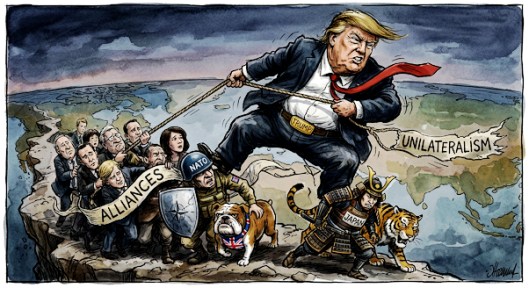
JSO: what may the Trump Administration have neglected most in its foreign affairs activity?
ALM: From a diplomatic, intelligence, and grand-strategy perspective, analyzing the Trump administration’s foreign policy vulnerabilities requires looking at systemic friction points—areas where critics, career diplomats, and national security analysts argue the foreign policy apparatus was either overlooked, bypassed, or structural liabilities were introduced.
Rather than a simple checklist of crises, foreign affairs analysts generally highlight five core areas where the administration’s approach left significant gaps:
1. Interagency Process & Institutional Continuity
- The Gap: Foreign policy was heavily centralized within a small inner circle of advisors, often bypassing the traditional interagency process (National Security Council coordination, State Department regional desks, and career intelligence briefings).
- The Consequence: Unilateral or sudden policy declarations (often via social media or direct executive decrees) frequently caught career diplomats, intelligence agencies, and defense officials off guard. This created an environment where long-term institutional memory and regional expertise were underutilized, leading to erratic policy execution.
2. Multi-Lateral Alliances vs. Transactional Bilateralism
- The Gap: The administration prioritized a transactional, single-issue bilateral model (“What is the immediate, direct yield for the U.S.?”) over the maintenance of traditional, multi-lateral alliances like NATO, G7, or regional security blocs.
- The Consequence:While pressing allies to increase defense spending yielded short-term burden-sharing wins, it frayed diplomatic goodwill and reduced trust. Multi-lateral frameworks take decades to build; treating them as purely transactional created security vacuums in places like Eastern Europe and the Indo-Pacific, which rivals like China and Russia moved to exploit.
3. Soft Power & “Gray-Zone” Strategic Influence
- The Gap: The administration relied heavily on hard-power instruments—tariffs, economic sanctions (“maximum pressure”), and direct military force—while cutting or downplaying soft-power channels (foreign aid, public diplomacy, democratic institutions, and cultural diplomacy).
- The Consequence: Soft power is the grease in the gears of statecraft. Neglecting diplomatic engagement in non-military spheres (such as international standards bodies, development infrastructure in Africa/Latin America, or international legal forums) allowed China to aggressively expand its Belt and Road Initiative and institutional footprint worldwide with minimal U.S. counterweight.
4. Post-Conflict Planning & Strategic End States
- The Gap: Policy actions were often focused on high-visibility transactional “deals” or rapid disruptions without a fully articulated “day after” strategy.
- The Consequence: Examples included rapid troop drawdown announcements (e.g., Syria, Afghanistan) or intense maximum-pressure sanction campaigns (e.g., Iran, Venezuela) where the strategic pressure was applied, but the diplomatic off-ramps or long-term stabilization plans were insufficiently developed. This frequently left power vacuums or forced field commanders and diplomats to scramble to mitigate secondary instability.
5. Non-Traditional Global Security Threats
- The Gap: The narrow focus on hard economic and military competition meant systemic, non-state security issues were frequently downgraded in importance.
- The Consequence: Issues such as transnational cyber hygiene, climate-induced migration, global pandemic preparedness, and supply-chain vulnerabilities were treated as secondary. Because these threats do not respect physical borders, failing to lead multi-lateral coalitions around them left the U.S. exposed to unexpected global shocks.
Analytical Summary
| Strategic Pillar | Traditional U.S. Approach | Trump Administration Approach | Primary Neglect / Friction Point |
| Alliances | Institutional & Multi-lateral | Transactional & Bilateral | Loss of long-term trust and allied coordination |
| Statecraft Tools | Hard + Soft Power Integration | Hard Power / Economic Coercion | Atrophy of public diplomacy and soft-power leverage |
| Policy Process | Interagency / Career Bureaucracy | Top-Down / High Personalization | Loss of institutional memory & strategic predictability |
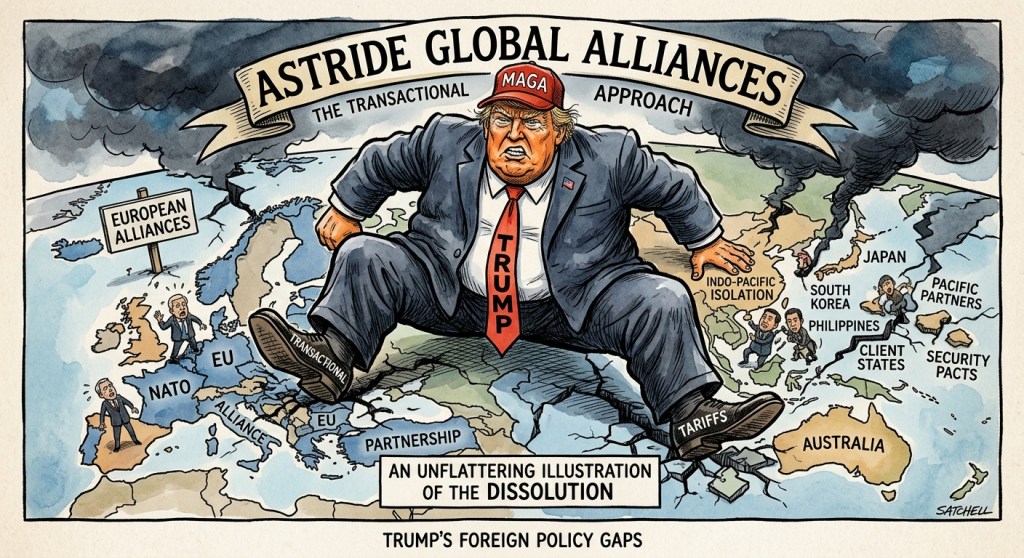
ALM Prompt: How did these foreign policy gaps specifically impact U.S. posture and alliance dynamics in the Indo-Pacific and Eastern Europe?
ALM: When mapping those general foreign policy gaps onto specific theaters like the Indo-Pacific and Eastern Europe, the macro-level systemic issues—transactionalism, institutional disruption, and erratic strategic signaling—translated into concrete security shifts on the ground.
In both regions, the primary result was not a total collapse of U.S. influence, but a profound shift toward regional self-reliance, strategic hedging, and the acceleration of multi-polar defense planning.
1. The Indo-Pacific: Burden-Sharing Conflicts vs. Deterrence Gaps
The Indo-Pacific presents a key paradox: while the administration explicitly identified China as the primary near-peer competitor in its strategy documents, its operational execution often alienated the exact frontline partners needed to balance Beijing.
                  ┌─────────────────────────────────────────┐
                  │       U.S. Transactional Signaling       │
                  └────────────────────┬────────────────────┘
                                       │
            ┌──────────────────────────┴──────────────────────────┐
            ▼                                                     ▼
┌──────────────────────────────┐                       ┌──────────────────────────────┐
│     Indo-Pacific Theater     │                       │    Eastern European Theater  │
├──────────────────────────────┤                       ├──────────────────────────────┤
│ • Cost-sharing disputes      │                       │ • NATO Article 5 ambiguity   │
│ • Cancelled/curbed exercises │                       │ • Conditional security aid   │
│ • Unilateral tariff spats    │                       │ • Direct summitry over NATO  │
└───────────┬──────────────────┘                       └───────────┬──────────────────┘
            │                                                     │
            ▼                                                     ▼
┌──────────────────────────────┐                       ┌──────────────────────────────┐
│  Allied Response: Hedging    │                       │ Allied Response: Autonomy    │
├──────────────────────────────┤                       ├──────────────────────────────┤
│ • Intra-Asian defense ties   │                       │ • European Strategic Autonomy│
│ • Expanded local procurements│                       │ • Accelerated defense budgets│
└──────────────────────────────┘                       └──────────────────────────────┘
- Fractured Bilateral Alliances: The administration heavily pressured traditional treaty partners over base-hosting costs. Unilateral demands for massive increases in financial contributions (e.g., targeting South Korea and Japan) transformed historical security pacts into transactional fee-for-service relationships.
- Erosion of Military Readiness Signals: Sudden executive decisions to scale back or cancel major joint military drills—often announced without prior consultation with the Pentagon or regional commanders—undermined the operational predictability of U.S. forces. This sent mixed signals to partners like Taiwan, South Korea, and the Philippines regarding the permanence of the U.S. security umbrella.
- Trade Alienation: By simultaneously engaging in tariff spats with key regional players (such as India and Vietnam) over trade imbalances, economic statecraft was decoupled from national security goals. This made it harder to build unified economic fronts against Chinese market dominance.
- The Regional Realignment: To compensate, regional actors began hedging. Nations like Japan, Australia, and India rapidly accelerated their own bilateral security ties (such as reciprocal access agreements and defense tech transfers) to ensure stability independent of Washington’s political cycles.
2. Eastern Europe: Deterrence Decay and the Strategic Autonomy Push
In Eastern Europe, the gaps between strategic rhetoric and operational execution created significant friction, particularly along NATO’s eastern flank.
- Ambiguity Around Article 5: Public rhetoric questioning the absolute guarantee of NATO’s collective defense clause created uncertainty for frontline states like the Baltic nations and Poland. Conditioning security guarantees strictly on meeting specific GDP defense spending thresholds introduced a element of risk into traditional deterrence posture.
- Bypassing Alliance Mechanisms: Direct summitry and diplomatic engagements with adversaries—often conducted outside traditional NATO coordination structures or without European allies present—left Eastern European capitals concerned about behind-the-scenes bargains regarding regional security architectures.
- Disruption of Aid and Troop Movements: Unilateral announcements regarding troop repositioning in Western/Central Europe, alongside conditional holds or pauses on security assistance, disrupted long-term military logistics and defense planning for frontline forces.
- The Transatlantic Realignment: Eastern European states responded through a dual-track strategy. Frontline states like Poland rapidly expanded their domestic military acquisitions. Concurrently, major European powers accelerated discussions around European Strategic Autonomy—aiming to build independent defense-industrial capacities so that European security is not entirely dependent on the outcome of U.S. presidential elections.
Structural Comparison
| Regional Dimension | Indo-Pacific Impact | Eastern European Impact |
| Primary Pressure Point | Host-nation cost-sharing & trade friction | Article 5 conditionality & defense spending thresholds |
| Adversary Dynamic | Encouraged Beijing to test regional boundary limits | Complicated unified deterrence against Russian expansion |
| Allied Adaption | Horizontal Asian defense networks (e.g., Japan–Australia–India) | Strategic European defense autonomy & localized force building |
Reference
Grossman, Derek. “America’s Indo-Pacific Alliances Are Astonishingly Strong.” RAND, December 8, 2023.
Of course, AiLaMer has done the heavy lifting–well, about three seconds of it, five tops, altogether–on all of the above but the reference which I’ve presented in my preferred BackChannels style. Were I a person of power with the ability to order course corrections to so many egregious insults to American as well as international security in defense of deeply established business, cultural, defense, diplomatic, and trade relationships, I’d be on the horn this minute. Appropriately prompted, AiLa–for short–summoned the illustrations as well.
— J. S. Oppenheim, Editor & Publisher.
###

