
Tags
Active Measures, Criminals in Power, Disinformation and Lies, Donald Trump, foreign affairs, international relations, Vladimir Putin
In political science, two measurements may determine the strength of political organizations from tribes to states: political coherence and political cohesion.
Do we agree on who we believe we are and with that our sense of mission and purpose in existence?
Do we exist together in good times and bad, in our holidays–and in war or in the depths of distress?
Antagonists — and all political systems have them — weaponize language to break the bonds of a healthy comity through lies — baseless accusations, defamations, and slanders; fabrications, framing, and frame-ups; false narratives and omissions of fact — that do their corrosive work. Promises become doubtful; trust between partners erodes; cultural and social reality even become fair game for “alternative facts” (there are none but fraudulent claims) and the endless invention of fictional speculations and theories. Anything could have happened but what did may meet with deflections of attention and delusional denials of truth especially where the antagonist has committed crimes.
Countermeasures and defenses against disinformation–all lies are that–are but two: empiricism and integrity.
As a Eurasian antagonist to the West, specifically the western civilizational experience characterized as “Greco-Roman, Judeo-Christian” in the cultivation and expansion of populations emerging from the Mediterranean Basin in northern and western expansion, Russia has relied on an eastern barbarism in control, financing, and force for its accretion of subjected populations across centuries with itself contracting and expanding with the fortunes of war. It knows itself as having once been a tribute-paying province of the Mongol Empire. Here is an AI report prompted by the query, “Mongol Empire, tribute from Russian principalities” –>
Following the 13th-century Mongol invasion, Russian principalities became vassals of the Golden Horde, paying heavy, regular tribute (in silver, goods, and people) to avoid destruction. This “Tatar Yoke” lasted until 1480, with Moscow eventually dominating tribute collection, which helped consolidate its power.
Key Aspects of the Mongol Tribute System:
- Administration: Initially collected by Mongol agents (basqaqs), the system shifted to using local Russian princes to gather the tribute by the 14th century.
- The Yarligh: Princes required a yarligh (patent of authority) from the Khan to rule.
- The Role of Moscow: Moscow’s princes, particularly Ivan Kalita, secured the right to collect tribute for the Mongols, using this position to enrich themselves and increase their influence over other principalities.
- Exemptions: The Russian Orthodox Church was generally exempt from paying taxes, which allowed it to grow in power.
- End of Rule: The burden of tribute continued until 1480, when Ivan III refused further payments, culminating in the Great Stand on the Ugra River.
The system of tribute and political dependency heavily influenced the development of the Russian state, fostering centralized, autocratic power.
One may see in today’s assault on the west through a subaltern in the United States the sensibility of Vladimir Putin’s intent to establish a new nobility–the most wealthy of an empowered class–to keep themselves fat off the creativity, entrepreneurship, and labor of Europe and North America. The modern expression of that desire in Ukraine had been looting through skimming the profits of firms through Putin’s henchman Viktor Yanukovych. For America, some similar role would seem in store for Donald Trump and his favored associates and family. Call it “Rule By The Rich”–Americans would be subjected to the capricious desires in greed and power of a class determining their fate with impunity. The permit to lie to the people without apology would likewise seem a part of the Trump-Putin program in autocratic and absolute power.
The Functional and Political Purposes of Lies
Lies have always been told to hide something or to get something. Cover the crime or flatter the boss, the dishonesty always has at least an intended payoff. The emotional motivation for lying has been well explained on BackChannels and may for present purposes be expressed in this modular form addressing “Malignant Narcissism”:
Signal: delusional, grandiose, messianic ideation absent of normal boundaries and limits, i.e., the parameters of normal conscience.
Process: https://conflict-backchannels.com/2022/07/10/malignant-narcissistic-process-distilled/.
Ramifications: https://conflict-backchannels.com/2023/01/20/ftac-why-putin-wont-stop-until-stopped/; https://conflict-backchannels.com/2024/04/22/trump-delusional-and-innocent/. In language: https://conflict-backchannels.com/2024/10/16/a-dark-mirror-in-language-ii/.
For the purposes of political psychology, the malignant narcissist fears public humiliation and shame, something experienced as a child (“Narcissistic Mortification”) and feels compelled to project his image in power as unassailable, courageous, and heroic.
There is beside the emotional motivation additional practical compulsion to lie on behalf of the possession of power, and that is to sustain one’s most loyal associates and family in sharing the wealth associated with it and otherwise keeping all outside the autocrat-narcissist’s circle of power in sharing in power themselves. Those, after all, needs must be subject to the will of the powerful and treated as the property of the state as without inherent value but for their lesser contributions to the wealth of the ruling power’s domain.
What may lies do for installed feudal-medieval mafia and their networks?
Confusion
The “firehose of falsehoods flooding the zone” — or some such — has the effect of confusing issues by making certain the vulnerable (to lies) have no rational anchor for argument while faith alone proves insufficient for political judgment and navigation.
Among the most destructive compendiums of bullshit: conspiracy theories that overwhelm disbelief with disingenuous and endless invention. The false becomes the truth; the irrational–the real; and the suggestion may for a few provide sufficient cause for violence. The sophist’s mind virus may inspire otherwise inexplicable crime e.g., “‘Pizzagate’ Gunman Sentenced to 4 Years in Prison”, NPR, Merrit Kennedy, June 22, 2017; planted in the minds of incurious thousands or millions–similar bundles of crazy would seem to seed cultures — actually, cults — detached from reality and reason altogether.
Anything plays.
“They’re poisoning the blood of our country” claimed Donald in his 2024 presidential campaign in relation to migration from Central and South America — and he stuck to that bigoted remark with no other substance than that of having revealed his own cowardice, fear, and hate — and that of the political base that took him seriously as well.
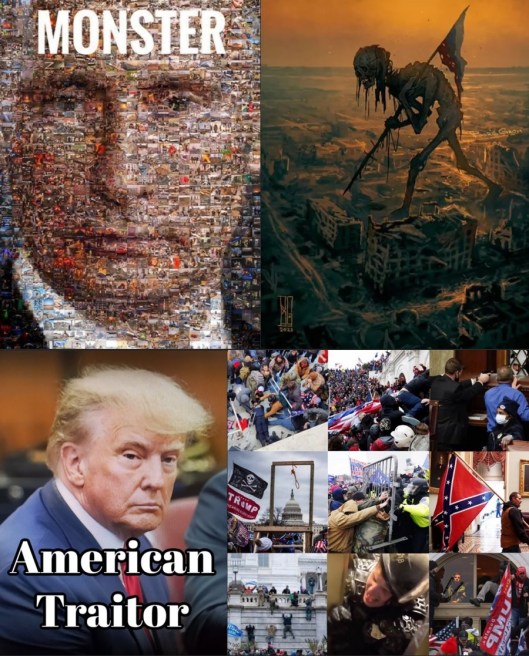
From the fraudulent election conspiracy claims motivating the violence of the January 6, 2021 insurrection, an event that involved obtaining and staging fake Electoral College ballots for putting place of authentic ones, to the whole pack of lying lunacy intended to sustain his stay in power, the result has been only the confusion of his base and the rising anger of the greater republic, a fact in part evidenced by Trump’s approval-rating polls, e.g., https://news.gallup.com/poll/203198/presidential-approval-ratings-donald-trump.aspx; https://www.economist.com/interactive/trump-approval-tracker; and https://www.newsweek.com/donald-trumps-disapproval-rating-hits-record-high-11417596.
Mass Perceptual Control and Narcissistic Supply
“Supply” — “Unlimited Narcissistic Supply” — or reward for the malign narcissist may be defined as public adoration and validation without end. For emotional as well as practical reasons (like being arrested by a righteous opponent), few dictators relinquish power of their own accord (only Pakistan’s Pervez Musharraf comes to my mind as having the decision to make, albeit it under state and international pressure, and then making it in favor of a transitional democratic mode–even so, and this after leaving Pakistan for London and Dubai, he returned to Pakistan to return to politics. got arrested for unresolved grievances, fled court, and for emergency medical leave again ended up in Dubai).
Political repression in Russia under Vladimir Putin has intensified dramatically, particularly following the full-scale invasion of Ukraine in 2022, evolving from targeted, selective pressure into a systematic, widespread crackdown that observers describe as the most severe since the Soviet era. The regime has effectively eliminated independent media, banned opposition organizations, and criminalized dissent, with over 1,700 known political prisoners as of late 2025—a figure surpassing the number of political prisoners in the Soviet Union in the mid-1980s
AI, January 27, 2027
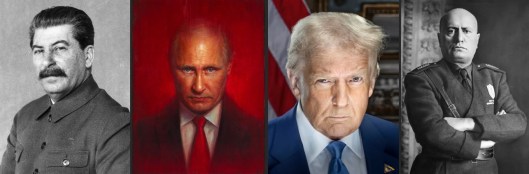
“Hardly a day goes by without another political arrest in Russia. Under Vladimir Putin, the scale of repression against those who disagree with the Kremlin has surpassed anything seen in our country since the death of Joseph Stalin” (Kara-Murza, Vladimir. “What Putin is crushing in Russia.” The Washington Post, October 14, 2025).
Someone must have added the “t” for fame isn’t always fleeting but for some positively fleeing and leaving behind only infamy.
For Putin and others of his vulgar KGB class, the game has turned to arresting corrupt others (state surveillance pays off!) accompanied by the confiscating of their cash (for a rough visit on that subject see Jason Jay Smart’s YouTube videos — e.g., “Putin’s War Cash Grab: $28B SEIZED Inside Russia”) as the Russian state collapses in relation to the disruption of its oil revenues and oil industry and the related distributions that support downstream business and industrial processes. When the chaos, destruction, looting, and treachery abates in Russia, The Money — my guess — and its owners will move into Europe or South America (wherever) to live out their lives as pseudo new colonial investors.
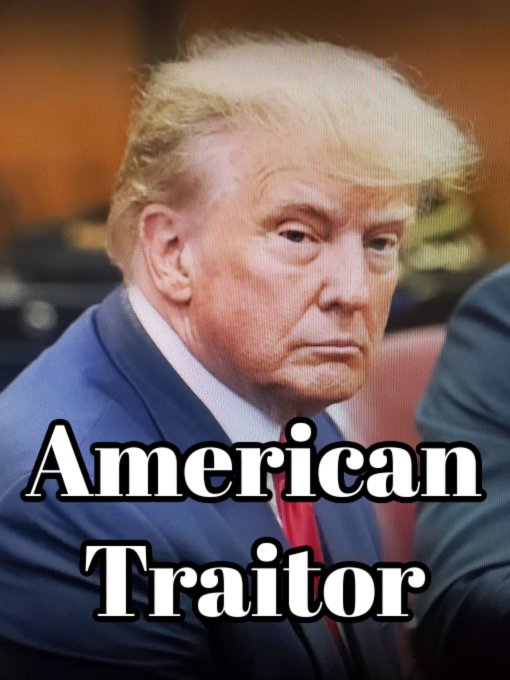
Donald Trump has a state that continues working despite his efforts to discount, overlook, or pervert its Constitution, customs, and laws to suit his exclusive grip and will while his appearance as a dictator — an evil man, an incompetent and vile ignoramus drowning in his own accumulating disasters — grows by the day. He has replaced the best of Federal executives and officials with incompetent zealots loyal to himself, degraded the nation’s counterintelligence and defense agencies by similarly removing any capable of threatening his own authority — add the professionals experienced in investigating him and his mob — and has made the nation — for the first time in history — a doubtful partner in the defense and promotion of compassionate and modern democratic societies worldwide. He appears to view the nation as he imagines himself: embattled and victimized — and the only way out of his miserable condition is to rise to the control of all that would make him feel small again. For what he cannot reason, he reverts always to coercion and force — or, confronted by greater power than himself, he backs away.
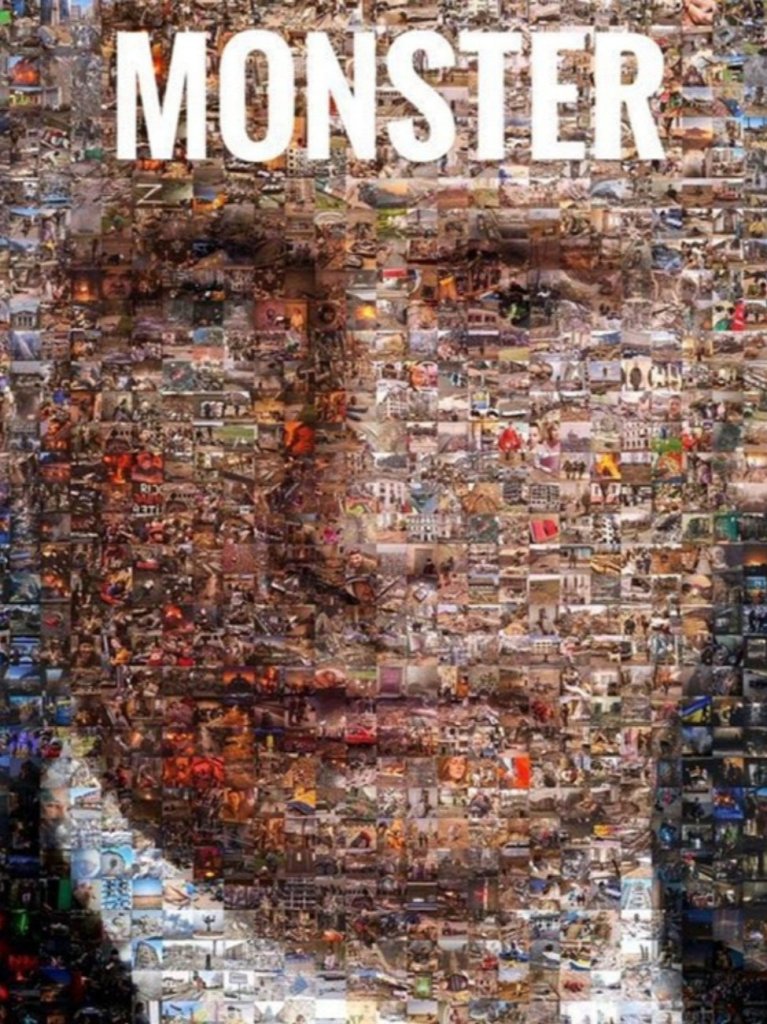
It’s ironic that the two world leaders who would most demand for themselves the accolades and approvals of the world — that Nobel Peace Prize for Donald! Respect from the global defense industry for exploring “Hybrid Warfare”, “Gray Zone Tactics”, and “Hypersonic Missiles” for Putin — know themselves as criminals most of all as each holds on to power through coercive methods and the most callous and vain attempts to manage his bloodied ugly image for posterity.
–33–


 BackChannels