• Home
  • About
  • Concepts, Coins, and Terms
    • Anthropolitical Psychology
      • Civilizational Narcissism
      • Conflict – Language Uptake – Social Programming and Scripting – A Suggestion
        • Language Uptake – Programming – On Learning to Listen
        • Mouth –> Ear –> Mind –> Heart System
        • Social Grammar
      • Facsimile Bipolar Political Sociopathy
      • Malignant Narcissism
      • Narcissistic Scripting
      • Normative Remirroring
      • Paranoid Delusional Narcissistic Reflection of Motivation
    • FTAC – “From The Awesome Conversation”
    • God Mob
    • Intellectual Battlespace
    • Islamic Small Wars
    • New Old Now Old Far Out and Lost Left
    • Political Spychology
    • Shimmer
  • Library
    • About Language
    • Russian Section
  • Comments and Contact

BackChannels

~ Conflict, Culture, Language, Psychology

BackChannels

Author Archives: commart

FTAC – On the Syrian Tragedy

29 Friday Apr 2016

Posted by commart in 21st Century Feudal, Conflict - Culture - Language - Psychology, FTAC - From The Awesome Conversation, Syria

≈ Leave a comment

Tags

21st Century Neo-Feudalism, American values, modern values, modernity, political corruption, Putin, Russian Federation, western ethics

Oil has nothing to do with the Syrian Tragedy. The primary “driver” is the medieval political absolutism exploited and sustained by Putin, Assad, and Khamenei, each of whom relies on feudalism to keep themselves in business.

Note that Putin put $52 billion into the Winter Olympics at Sochi. What Putin has put into Syrian humanitarian aid: $0.00.

Obvious pacifism in the Obama Administration has been balanced some by weakening Putin’s own ability to prosecute his chosen enemies across time and in intensity. The in-and-out demonstration of power in Syria may reflect that reality, although the show worked well in Moscow.  The stalling of the incursion into Ukraine through Crimea also attests to the Russian Federation’s underlying fragility. However, Russia remains a nuclear power, a newly militarized (revived in that aspect) and nationalist state, and a little unpredictable. It may be for that reason that “diplomacy” rather than “confrontation” has so far defined the western limits of engagement in Syria.

No one knows today how it will end, but I believe the west may look back on this period with immense shame for not having done more to block “Moscow, Damascus, Tehran” while pulling Syria — and Syrians — out of the medieval mode and into a modern politics. Results of related efforts on the battlefield appear to me to have been mixed, although one may credit Assad with the incubation of ISIS through the election to bomb other targets and leave Baghdadi’s enterprise to develop.


The themes are now tangled but still coalesce around “medieval vs modern”.

What is “medieval” now?

And what is modern?

Although BackChannels has frequently paired “medieval” with “absolute power” — and as much seems so — it may be more worthwhile at this point to travel into the 21st Century image of deeply medieval political worlds.

BackChannels readers will get to Riyadh, but let’s start with Moscow.

I have used the term in my own work, as well, and I define sistema as a style of exercising power that turns the country’s people into temporary operating resources, against their wills and in breach of their rights.  Sistema is a deep-seated facet of Russian culture that goes beyond politics and ideology, and it will persist long after Putin’s rule has ended.  Sistema combines the idea that the state should enjoy unlimited access to all national resources, public or private, with a kind of permanent state of emergency in which every level of society — businesses, social and ethnic groups, powerful clans, and even criminal gangs — is drafted into solving what the Kremlin labels “urgent state problems.”  Under Putin, sistema has become a method for making deals among businesses, powerful players, and the people.  Business has not taken over the state, nor vice versa; the two have merged in a union of total and seamless corruption.

Pavlovsky, Gleb.  “Russian Politics Under Putin: The System Will Outlast the Master.” Foreign Affairs, May / June 2016 (10-17).

Q: What are the roots of Putin’s ideological worldview?

A: By the beginning of the 1990s Putin had developed almost all the ideas he espouses today. He’d only just started working in St Petersburg, but if we look at documentary recordings of the time, we see that he already had a whole series of attitudes concerning, for example, the idea that Russia’s system of administration should be a unitarian, centralized state, and also his condoning the chinovniki [bureaucrats] taking bribes. That surprised many people, but it’s undeniable that he took a positive view of this. He even shared—and repeated—the scandalous thesis of the then mayor of Moscow, Gavril Popov, that bureaucrats had the right to a commission on contracts.

Pavlovksy, Gleb (Interviewee) and Tom Parfitt (Interviewer).  “Putin’s World Outlook.”  New Left Review, 88, July-August 2014.

And here’s an image from the modern world according to Andy of Mayberry:

Posted to YouTube May 22, 2012.


The “Syrian Tragedy” — I don’t know what else to call it, for it represents in its various facets a bitter revolution, a (medieval) tyrant’s assertions about a family’s outright control and ownership of a state, a civil war but one complicated by multiple sides and the political “flavors” preferred — conveniently, earnestly, momentarily — by the roving bands of the hours — but it is most certainly the result of a consecrated villainy fit to the absence of conscience and the bloody caprice of the worst of kings and emperors of history.

Once tweeted: “Putin, Assad, Khamenei — together they are defending absolute power.”

Pavlosky, in the Foreign Affairs article cited, notes of Putin’s inner circle, “Transformed from a campaign committee into a presidential entourage, the team has changed only marginally in its composition.  These are people who have never once told Putin, “You can’t do that” (p. 12).

In light of that observation, it might be worth taking another look at Andy and Opie and the difference between a quarter earned and three “just because”.

Cited and Related Reference

Pavlovksy, Gleb (Interviewee) and Tom Parfitt (Interviewer).  “Putin’s World Outlook.”  New Left Review, 88, July-August 2014.

Pavlovsky, Gleb.  “Russian Politics Under Putin: The System Will Outlast the Master.” Foreign Affairs, May / June 2016 (10-17).

# # #

On Naz Shah’s 180-Degree Apology

29 Friday Apr 2016

Posted by commart in Anti-Semitism, Conflict - Culture - Language - Psychology, FTAC - From The Awesome Conversation, Great Britain and United Kingdom, Political Psychology, Regions, Syndicate Red Brown Green

≈ 1 Comment

Tags

anti-Semitism, medieval vs modern, Naz Shah, political turnaround

I am sorry.

For someone who knows the scourge of oppression and racism all too well, it is important that I make an unequivocal apology for statements and ideas that I have foolishly endorsed in the past.

The manner and tone of what I wrote in haste is not excusable. With the understanding of the issues I have now I would never have posted them. I have to own up to the fact that ignorance is not a defence.

http://www.jewishnews.co.uk/jewish-news-exclusive-naz-shah-my-apology-to-the-jewish-community/


From the Awesome Conversation —

FB friend: Just a political move of a Jew hater!

Editor: I’m not so certain. People dead-end on bad habits, including bad habits of mind. In the past month, she has been the guest at a private seder without issues; she has made a public apology that reads as authentic statement . . . I think the world surrounding her has changed, and Naz Shah MP has set off in a new direction.

FB Friend: yes, the beauty is in the eyes of the beholder! It’s good to be optimistic! i am skeptical though!

Editor: I’ve just been to her page, and you can read the anti-Semitic spew that comes out in her crowd. Naz Shah with her apology and her soul has betrayed that mob, so she’s going to have to gather herself and face it. Good news if she has courage, she’ll have decent company and plenty of it.


Not only Naz Shah has been plunged into soul searching, the entire Labour Party has been lit up like summer noon by no less liberal a spotlight than The Guardian:

Lady Neuberger claimed the issue in Labour was “attached to Jeremy Corbyn becoming leader”, and “an issue within the hard left”.

John Woodcock, MP and former chair of the Labour Friends of Israel, said: “The handling of this has been a mess. But the most important thing is that the Labour leadership properly acknowledges now the scale of the antisemitism problem that is growing in the party.


Ben Judah, author of  Fragile Empire: How Russia Fell In and Out of Love with Vladimir Putin (New Haven and London: Yale University Press, 2013) has weighed in on George Galloway’s Hitlerian method — leveraging “Jew hate” (start with the stew — anger, fear, jealousy, ignorance, impoverishment, suspicion, shame — and stir it up) into political power and comfortable digs — and legacy in Bradford:

Perhaps that cycling-up of the anti-Semitic phantasmagoria that has duped and shortchanged Bradford will stop now with Naz Shah’s turnaround and the Labour Party’s (perhaps garment-rending) introspection as regards its tolerance for bigotry (anti-Semitic cant generally signals greater antipathy and contempt for additional others matched to the speaker’s own avarice and penchant for social control and related plunder).


Underestimated: the length of the shadows cast across the Left / Far Left (on this blog, the New Old Now Old Far Out and Lost Left and Syndicate Red Brown Green) by Nazi Germany and Soviet Russia and their deliberate, intense, and medieval defamation of Jewry in service to whipping their mobs and using that energy to build the aristocracies that would then ride them into the ground.

Cited and Related Reference

Edwardes, Charlotte.  “George Galloway: I’ve always fancied being mayor – and next year I finally could be.”  Evening Standard, November 4, 2015.

Judah, Ben.  “You wouldn’t be surprised by Naz Shah’s remarks if you knew more about the city she came from.”  The Independent, April 29, 2016.

Mason, Rowena and Heather Stewart.  “Naz Shah row: peers accuse Labour of failing to root out antisemitism: Lord Levy and Lady Neuberger say Bradford West MP’s case highlights wider issue of antisemitism in parts of the left.”  The Guardian, April 28, 2016.

Shah, Naz.  “Jewish News Exclusive: Naz Shah: ‘My apology to the Jewish community’.  Jewish News, UK, April 27, 2016.

Addendum – April 29, 2016, 8:17 a.m., EST

The conversation rolls on:

Facebook Friend:  It is claimed that Shah’s apology was much more contrite before Seamas Milne took his blue pencil to it, speaking specifically about antisemetism.

BackChannels: Then she’s now wrestling with conscience and her political position. Gosh, I would like to speak to her for a few minutes! 🙂 When we “talk politics” we seldom talk “political psychology”, but behind all of this — behind Galloway, behind the disinforming and misshaping of Bradford’s political perception — there has been at work the malignant narcissism that manipulates mobs, that reaches for their sorrows and then gives the same a plate of readymade answers to what bothers them. Counter to that: the reparative vision — and once gotten, it’s impossible to give it back or give it up.

The latest on Seumas:

https://youtu.be/6u15lisZGAA 

Posted to YouTube April 29, 2016

Related: http://order-order.com/2016/04/29/seumas-milne-praises-hamas/

Related (Posted Both At and After Publication and Addendum Dates):

Cohen, Justin.  “Suspended MP Naz Shah tells synagogue: ‘I was ignorant about Judaism.”  Jewish News Online, May 30, 2016.

Cohen, Nick.  “I saw the darkness of antisemitism, but I never thought it would get this dark.”  The Guardian, April 30, 2016.

Julius, Anthony, Nick Cohen, and Daniel Johnson.  “The Socialism of Fools.”  Standpoint, January / February 2013.

Malik, Kenan.  “The British Left’s ‘Jewish Problem'”.  The New York Times, May 3, 2016.

Mosbacher, Michael.  “The Stalinist Past of Corbyn’s Strategist.”  Standpoint, December 2015.

Omer-Jackaman.  “The Left, Anti-Zionism & Anti-Semitism.”  London Progressive Journal, March 28, 2015.

# # #

Reference – Two Articles – BDS on Campus – BDS and Related Networks, Undercover Investigative Reporting

24 Sunday Apr 2016

Posted by commart in 21st Century Feudal, Anti-Semitism, Conflict - Culture - Language - Psychology, Politics

≈ 3 Comments

Tags

anti-Semitism, anti-Zionism, BDS, BDS and jihad, investigative reporting, terrorism

The university campus is becoming increasingly hostile to both Jews and Israel. From what I have witnessed and experienced, it is no side effect, but rather part of a deliberate and well-planned strategy. We are witnessing an entry operation.

The Planned Palestinian Invasion of the University


Arab-American college radicals such as Jess Ghannam (a professor of psychiatry today at UC San Francisco), Zahi Damuni ( a biochemist, formerly of St. James University in Canada), and Mazen Qumsiyeh (a geneticist from Yale, fired for anti-Semitic emails), some of whom were born in the West Bank, went on to graduate university and with their professional incomes started the group Al Awda (Arabic for “the Return”), an organization set up to promote PLO and later Hamas goals against Israel’s existence.

During this time, Al Qaeda was also founded by a Palestinian named Abdullah Azzam, the mentor for Osama Bin Laden. This was the Muslim jihadist link behind the BDS Movement to this day.

Today, the leadership of Al Awda helps promote BDS along with myriad other groups and clubs that have sprung up to promote starving out the Jews in the Middle East and, by extension, linking to the worldwide jihad. Al Awda is still very active in the USA and in promoting BDS.

BDS was launched in Israel in 2005 by Palestinian Jamal Juma and later Omar Barghouti, an Arab student from Kuwait attending Tel Aviv University helped to specifically launch the academic boycott in Israel and worldwide with the help of Jess Ghannam, Manzar Foroohar (an Iranian Muslim) and some other Arab professors in the USA in 2007 that comprised a steering committee.

http://israelbehindthenews.com/exclusive-undercover-investigative-films-expose-inner-workings-of-bds/14626/ (paragraphing added for readability on BackChannels).


David Collier’s investigative piece in The Algemeiner (April 21, 2016) details the methods used to find and fund Palestinian students specifically to stir up BDS-related anti-Semitic sentiment on the campuses of the United Kingdom.

Lee Kaplan, who has made a career of investigating the International Solidarity Movement (in BackChannels’ opinion, too many themes lead back to Moscow, Soviet Era and Feudal Revanch), has produced a sprawling tour de force in investigative journalism, videos included, as regards connections between Islamist movements and the BDS Movement.  It’s difficult reading for the wall of verbage presented to the eyes online, but, for the patient, it’s rich with BDS Movement links back to the history of Palestinian terrorism, and it affords insight into the greater politics leading into the progressive circles that unwittingly — or, if otherwise, less innocently — sustain suffering throughout the middle east.

Cited and Additional Reference

BackChannels.  “BDS (Cult) Modules.”  March 8, 2016.

Collier, David.  “The Planned Palestinian Invasion of the University.”  The Algemeiner, April 21, 2016.

Kaplan, Lee.  “Does the Pro-Terror Left Violate U.S. Tax Laws?”  Frontpage Magazine, September 26. 2005.

Kaplan, Lee.  “Exclusive Undercover Investigative Films Expose Inner Workings of BDS.”  Israel Behind the News, April 14, 2016.

Kaplan, Lee.  Stop the ISM.

# # #

Extreme Political Or Religious Worldviews Create Dysfunctional Societies

23 Saturday Apr 2016

Posted by commart in Conflict - Culture - Language - Psychology

≈ Leave a comment

Andy Rhodes's avatarPersuade Me Politics

us versus the world - 1c

When comparing quality of life conditions between advanced Western nations and individual states within the U.S., a growing amount of data available shows that those which are the most conservative and religious are the most violent and plagued with far greater social problems in more than a dozen categories like overall crime, economic mobility, infant mortality, environmental abuse, teen pregnancy, incarceration, life expectancy, poor educational systems, murder, healthcare efficiency, average worker to CEO pay ratio, paid maternity leave, obesity, income inequality and minimal worker’s benefits.

The claim expressed in the title generally applies as much to individual states in America as it does to the nations of the world.  Contrary to the repeated slogans of asserted “self-evident truths” within my very conservative upbringing, I’ve discovered that the economic, historical and sociological data shows that the best answer is a moderate combination of conservatism, liberalism and libertarianism. See in the statistics below sizable evidence…

View original post 1,944 more words

Now – The Most Peaceful Time In World History

23 Saturday Apr 2016

Posted by commart in Conflict - Culture - Language - Psychology

≈ Leave a comment

Andy Rhodes's avatarPersuade Me Politics

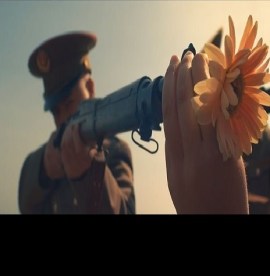
gun flower peace -10Much of the information below comes from Steven Pinker’s book, The Better Angels of Our Nature: Why Violence Has Declined.  This remarkable text evaluates and combines the work of dozens of historians to show that, contrary to popular opinion on the left and right, the planet has become far more peaceful than in any other time in history.  Terrible things like the following are in radical decline (or in some cases have been eliminated): warfare, rape, murder, judicial torture, child abuse, legal and illegal slavery, use of the death penalty, robbery, infanticide, bullying, lynchings, corporal punishment, misogyny, theft, domestic abuse, racism, blood sports, religious persecution, burglary, debtors’ prisons, sexism, abortion, dueling, property crime, witchhunts and animal abuse.  This process started when societies began to organize away from hunter-gatherer communities between 7,000-10,000 years ago into structured civilizations, but shifted to an accelerated level of reform during the 18th century’s Age of Enlightenment and…

View original post 1,569 more words

Turkish Autocrat Erdogan – On Track

19 Tuesday Apr 2016

Posted by commart in Conflict - Culture - Language - Psychology, Political Psychology, Turkey

≈ 2 Comments

Tags

dictatorship, Erdogan, foreign affairs, Kurdish struggle, Turkey

Posted to YouTube April 14, 2016.


Posted to YouTube March 31, 2016.


From the early sacking of the generals accustomed to the state that Kemal Ataturk bequeathed to the Turks to the latest and disingenuous assaults on the Kurdish People under the cover of fighting terrorism accompanied by something like the resurrection of the Kurdish PKK, a Marxist-infused movement dating back to the 1970s and long stalled in its ideological tracks but naturally mixed back into Kurdish politics, Turkish President Tayyip Recep Erdogan has pursued a course in action, behavior, and language more familiar to Moscow than to Washington.

Add in that grandiose residence, the “White Palace”, a mixed development Versailles, but with its private residential part supporting some 250 rooms set on a landscape dotted with at least a few $10,000 trees imported from Italy.

On this post, the related and additional reference sections and fair-use excerpts should provide plenty for reflection on Turkey as a NATO state that while fulfilling its military contract has drifted as a democracy far into authoritarianism.  Although the Moscow-Tehran axis blocks any chance of an Erdogan-Putin political “bromance” like that between Putin and Hungary’s Orban, who despite his state’s NATO membership has displayed the same drift toward authoritarian rule, Erdogan’s path remains the one that leads to dictatorship.

Related Reference — Freedom of the Press

https://freedomhouse.org/report/freedom-press/2015/turkey – “Turkey: 5-Year Decline in Press Freedom”: “Conditions for media freedom in Turkey continued to deteriorate in 2014 after several years of decline. The government enacted new laws that expanded both the state’s power to block websites and the surveillance capability of the National Intelligence Organization (MİT). Journalists faced unprecedented legal obstacles as the courts restricted reporting on corruption and national security issues. The authorities also continued to aggressively use the penal code, criminal defamation laws, and the antiterrorism law to crack down on journalists and media outlets.”

http://www.dw.com/en/security-for-turkeys-erdogan-scuffles-with-journalists-in-washington/a-19157072 – “Security for Turkey’s Erdogan scuffles with journalists in Washington”: “The president’s security detail removed one opposition Turkish reporter from the speech room, kicked another and threw a third to the ground outside the Brookings Institution, in a melee that provided Washington’s foreign policy elite a firsthand glimpse at the state of the press in Turkey.”  Note: In the United States, Secret Service details protect foreign heads of state.  However, it appears that Brookings, Erdogan’s own security detail may have made moves against would-be Erdogan critics.

Related Reference — Human Rights

https://www.hrw.org/world-report/2015/country-chapters/turkey – “World Report 2015: Turkey – Events of 2014”

https://www.amnesty.org/en/countries/europe-and-central-asia/turkey/report-turkey/ — “Turkey 2015/2016”

Additional Reference

Ben-Meir, Alon.  “Turkey’s Path to Dictatorship.”  Consortium News, March 10, 2016:

. . . Erdogan has used his strong Islamic credentials to project himself as a pious leader, when in fact he consistently engaged in favoritism, granting huge government contracts to those who supported him and to his family members, irrespective of conflicts of interest and the corruption that ensued as a result.

Filkins, Dexter.  “Erdogan’s March to Dictatorship in Turkey.”  The New Yorker, March 31, 2016.

Google Search.  “Erdogan, dictatorship” (last seen on date of this post’s publication).

Gursil, Kadri.  “Why Erdogan can’t end PKK war.”  Al-Monitor, April 5, 2016.

Human Rights Watch. “UN Committee against Torture: Review of Turkey
57th Session of the Committee against Torture.”  April 22, 2016:

The breakdown in 2015 of the government-initiated peace process with Abdullah Öcalan, the imprisoned leader of the armed Kurdistan Workers’ Party (PKK), has been accompanied by an increase in violent attacks, armed clashes, and serious human rights violations since summer 2015. The latter includes violations of the right to life and mass displacement of residents in eight southeastern towns where the security forces and PKK-affiliated youth groups have engaged in armed clashes, as well as denial of access to basic services including healthcare, food and education for residents placed under blanket curfew conditions for extended periods and in some cases months at a time. The past eight months have seen hundreds of security personnel, Kurdish armed fighters and civilians killed, with almost no government acknowledgement of the civilian death toll estimated at between 200 and 300 in this period. The renewed violence has provided the context too for numerous arrests of political activists and alleged armed youth on terrorism charges and ill-treatment of detainees.

See Richard Spencer’s piece, listed below, for an estimation of a changed PKK politics within the Kurdish effort to eject ISIS, where the Kurds of produced the most effective ground fighting force since the Syrian Tragedy took hold in 2011, and otherwise establish and sustain their autonomy despite their historic four-state division and subsequent treatment as an ethnic suzerainty.

Marcus, Aliza.  “The Kurds’ Evolving Strategy: The Struggle Goes Political in Turkey.”  World Affairs, November/December 2012:

“The PKK has become part of the people. You can’t separate them anymore,” said Zubeyde Zumrut (in Diyarbakir), co-chair of BDP, which won control of one hundred municipalities in the southeast of Turkey in the 2009 local elections and thirty-six parliamentary seats in the June 2011 national elections. “Which means if you want to solve this problem, you need to take the PKK into account.”

Mert, Nuray.  “Another banal expression of authoritarianism in Turkey.”  Hurriyet Daily News, January 18, 2016:

President Recep Tayyip Erdoğan’s recent attack against academics – who signed a petition condemning military operations in Kurdish cities and calling for peace and negotiations – is yet another banal expression of the authoritarian politics that have long prevailed in Turkey under Justice and Development Party (AKP) rule. All authoritarian regimes are anti-intellectual and this tendency intensifies when they are in trouble. So it is not surprising that Turkey’s president and his party look for scapegoats to blame for their domestic and foreign policy failures. Indeed, authoritarianism is rarely a reflection of political power; rather, in most cases it is a result of weakness.

O’Sullivan, Kate and Laura Benitez.  “We Quit Working for Erdogan’s Propaganda Mouthpiece.”  Vice, April 8, 2014:

We joined the agency in January, hired to edit English-language news, but quickly found ourselves becoming English-language spin-doctors. The agency’s editorial line on its domestic politics – and Syria, in particular – was so intently pro-government that we might as well have been writing press releases. Two months into the job, we listened to Deputy Prime Minister Bülent Arınç talking bollocks about press freedom from an event at London’s Chatham House, downplaying the number of imprisoned journalists in Turkey.

Popp, Maximilian.  “Kurdish Opposition Leader Demirtas: ‘Erdogan Wants a Caliphate'”. Interview.  Spiegel Online, April 19, 2016:

SPIEGEL: The government says it is exclusively pursuing terrorists.

Demirtas: The war is primarily focused on civilians that Erdogan suspects of supporting the PKK. Almost 400,000 people have had to leave their homes. The southeast of Turkey resembles Syria.

Serinci, Deniz.  “The PKK’s Evolution, 30 Years On.”  Rudaw, August 15, 2014.

Spencer, Richard.  “Who are the Kurds?  A user’s guide to Kurdish politics.”  The Telegraph, July 5, 2015:

What has happened is that Turkey has decided to allow Iraqi Kurdistan’s army, the Peshmerga, to join the YPG, the PKK’s Syrian affiliate, in defending Kobane.

The Kurds of south-east Turkey cheering the Peshmerga convoy as it passes are of course hoping they will save their fellow Kurds in Kobane. But they are also cheering the new-found unity of the Kurdish cause. For once, the faction-fighting of their leaders has been set aside in a common purpose, and the Kurd in the street feels anything is now possible.

The Young Turks.  “Crazy Muslim Theory From the Biggest Presidential Palace Ever. Video (satire). YouTube, November 22, 2014.

Tremblay, Pinar.  “Want to call Erdogan a dictator?  Get ready to hire some lawyers.”  Al-Monitor, January 27, 2016.

Wordsworth, Araminta.  “Turkish PM triumphs in the night of the generals.”  National Post, August 5, 2011:

The Turkish PM is on a roll: About 10% of the country’s top brass are in jail, awaiting trial for allegedly plotting against him. Voters have given him a mandate to rewrite the country’s constitution, produced under the shadow of a 1980 military coup and that allowed the military to interfere in the process of governance.

But there are suspicions the evidence against the officers was fabricated and the moves are intended to silence the opposition. Numerous journalists and academics are being held on similar charges.

# # #

FTAC – Absolute Power – Extremism – “Different Talks — Same Walk.”

15 Friday Apr 2016

Posted by commart in 21st Century Feudal, Conflict - Culture - Language - Psychology, FTAC - From The Awesome Conversation, Political Psychology

≈ Leave a comment

Tags

despotism, political psychology

https://conflict-backchannels.com/…/malignant-narcissism/

There are differences in how different scriptures work and (!) how they may be leveraged into religious or secular autocratic power.

I’m the editor of the blog cited, and for the idea that more human misery has to do with the character of leaders and their followers than with related artifacts — books, legends, poems, songs, etc. — I’ve used for dictators the phrase, “Different talks — same walk.”

In general, most people don’t like the “walk” — or strut — laid down by a strongman, but for the medieval of mind, the crowds or “masses” matter much less than relationships with similar powerful persons, their own inner circles in business, military, and paramilitary communities, and then the constituencies that have bought in with them. Out of that complex political community come the “evildoers” and those leveraged to cooperate with them.

“Different talks — same walk.”

The latest in polling has given us the “94 percent” figure: what is different then about the six percent who would endorse the violence against innocents that may be delivered with the cry “Allahu akbar”?

I think the true immediate axis in global conflict is that between medieval and modern conceptions of man and related concentrations or distributions of power in those who govern. How absolutely powerful a tyrant is compared to the leader constrained by institutional powers greater than himself.


Chatyping in social media dredges up a host of ideas familiar to BackChannels readers, not least among them the idea that a kind of personality produces for itself a political environment suited to its need for control of the surrounding world — and that to the point where it may mete out suffering to others with impunity.  Such power proves always deeply destructive and sadistic.

It’s best to catch it at the gates — in the truly functioning democracies, at the polls — but even then the popular will may invest in an egregious choice.

Addendum – April 16, 2016

Regarding narcissism, which may be malignant or reparative in its balance, one possible trigger for the malignant — those who seek absolute power over others and in the process lose their brakes (or “exceed limits”), an instance or pattern of “narcissistic mortification” may set off attempts at covering (hiding) and repair that lead to the barking, as it were, and the rejection of criticism.

https://en.wikipedia.org/wiki/Narcissistic_mortification

The reinvention of the self that follows may include a verbal part that then serves to aggrandize, elevate, empower the narcissist, and when it gets going as a kind of cycle and dare, then develops the business that is a cult at the lowest level and a dictatorship at the highest.

______

One may infer such a development between Jim Jones, the mass murder by Kool-Aid guy, and Bashar al-Assad, the mass murderer by way of whatever means have happened to be at hand, but not find the incident or period of mortification as that resides in the narcissist’s memory.

# # #

Moscow Misrules – Create Chaos – Promise Order – Collect!

14 Thursday Apr 2016

Posted by commart in 21st Century Feudal, Eastern Europe, Eurasia, Europe, Regions, Russia

≈ 1 Comment

Tags

disinformation, Moscow, nationalism, NATO, Putin, Russia

Posted to YouTube 6/22/2016.


Can you see the tree?  The trees?  The forest?

How about the blight?

Writing about Russia can be like that: Focus on a crime, follow it into more general corruption, arrive at the “mafia state”; overview energy and economics, move on to “hybrid warfare” and other aggressive military and paramilitary activities, and it dawns that there is an imperial state at work; have a glance at history, then get the nose out of the books and have a look around at present Putin & Co. relationships, disinformation, domestic information control, and global propaganda.

What may be most dangerous about Russia today is the slowly developing surround in alliance and axis accompanied by the seduction of the popular mind (in Soviet-speak, “the masses”) by way of the promotion of confusion.

For its part, this blog has pressed the idea that defending Putinism, much less spreading it, devolves to sustaining a deeply feudal-medieval worldview that in turn undergirds the power of state elites: the “New Nobility” that is the FSB; the “Vertical of Power” that is this most singular Russian President around whom other elements revolve; the Oligarchs that produce and enjoy the state’s wealth, albeit with a nod to the permit provided by their political mastermind.

From off that magnificent hub:

  • Putin-Assad-Khamenei (Putin-Khamenei);
  • Putin-Assad-Khamenei-Baghdaddi (together representing medieval absolute power);
  • Putin-Orban.

With numerous stolons — plant-generated surface and underground runners that propagate some of the species that use them — the Moscow hub appears to support an immense array of illicit and licit relationships.

Here’s a nugget pulled from the illicit bin, which, of course, is the one that most bothers the west:

The leaked files suggest that Roldugin is not keeping this wealth for himself, but is funneling the money to Putin’s inner circle, the reports say. Although Putin is not mentioned in the documents, he appears to be at the center of a web of Russia’s most influential and powerful men who owe their posts and fortunes to nothing but their friendship and association with him.

“It’s possible Roldugin, who has publicly claimed not to be a businessman, is not the true beneficiary of these riches,” the International Consortium of Investigative Journalists wrote. “Instead, the evidence in the files suggests Roldugin is acting as a front man for a network of Putin loyalists — and perhaps for Putin himself” (Mirovalev, LAT, April 4, 2016).

How deep go these relationships?

How many are there?

Can you see the tree?  The trees?  The forest?

The blight?


The Syrian Tragedy, as BackChannels refers to that horrific process in which it appears Damascus with tacit approval from Moscow and Tehran pursued a course certain to produce “The Terrorists” by preferentially bombing more moderate Free Syrian Army forces and refraining from curbing the early development of al-Nusra and ISIL, needs no introduction: the human spillover is either encamped or migrating all over the Middle East and Europe.

Posted to YouTube April 14, 2016.

Moscow, however, has been also busy from the Baltic Sea (as depicted in the above naval incident) to the Black Sea.  Crimea and Ukraine, Lithuania, and Moldova, among others moan with the impositions or threats posed by the phantom of the Soviet alive within the Russian Federation.

A note from Moldova (Timpul.md, February 11, 2015):

Given Moldova’s limited economic potential, the country struggles to maintain its defense capabilities. It only allocates 0.3% of its GDP for military purposes, which amounts to about 25 million dollars per year. Furthermore, Moldova presents limited interest to the West. Its strategic and economic importance is negligible. To make things worse, Moldova is highly dependent on Russian energy supplies, export and labor markets. Russian media control a significant share of Moldova’s informational space. Finally, Kremlin has been instrumental in using Russian speaking minorities in Moldova to advocate interest that often go against the will of the majority of the local population.

In earlier and Soviet years, Moscow was not above playing games to irk the west and possibly draw on its coffers and patience, for whom has always to pick up the pieces in the aftermath of so much meddling?  The BBC recently ran an audio clip featuring Somalia’s General Mohamed Noor Galal recounting the machinations that went into setting the course for war in the region between Ethiopia and Somalia known as the Ogaden.  In that misery, the Soviet enticed Somalia to invade the Ogaden and seize it from Ethiopia, and when Ethiopian forces were down on luck and firepower, it intervened to arm Ethiopia, which then recovered the Ogaden.

Somalia, however, has never recovered.

Whatever the Soviet was thinking — arms sales?  Expansion of forced influence? — it sure wasn’t thinking about the lives and needs of either either Ethiopians or Somalis.  In effect, in the promotion of the Ogaden War, The Bear wrapped an arm around the Somali leadership and offered to help the same acquire a fair patch of earth as redress for earlier grievance — and then with that accomplished, it did the same on the other side.

What works, unfortunately, works.

If you now see the Ogaden in history — you have seen one tree.

Nothing has changed: now as then, one may wonder at the character and mentality of the post-Soviet neo-imperial Russian leadership, the same that has treated Russia as it has other states: create chaos and danger, drown the masses in propaganda (ah, those good old Party days are here again!), and for power — and the protection of so many money making enterprises, licit and illicit — promise the super nationalist’s version of greatness, security, and stability.


Note: Putin-Erdogan — politically opposed (there’s that Shiite vs Sunni thing + NATO) but psychologically aligned (and Erdogan has the White Palace to prove it).

Reference

Akkoc, Raziye.  “Turkey’s president is not acting like a Queen – he is acting like a sultan’: Recep Tayyip Erdogan says he isn’t a sultan – rather he wishes to be like the Queen in a constitutional monarchy – but his actions suggest otherwise.”  The Telegraph, February 2, 2015.

Anadolu Agency.  “UN: No record of Russia humanitarian aid for Syria.”  February 4, 2014.

Balazs, Edith and Zoltan Simon.  “Orban Attacks EU Energy Plan as Putin Link Nets Hungary Gas Deal.”  Bloomberg, February 17, 2015.

Blair, David.  “Russia jets make ‘simulated attack’ on US warship in ‘aggressive’ Baltic incident.”  The Telegraph, April 14, 2016.

Farkas, Evelyn.  “Putin is testing Western resolve: Russian incursions into NATO airspace are evidence of Kremlin’s growing aggressiveness.”  Politico, November 25, 2015.

Farkas, Evelyn.  “Trump and Putin: Two liars separated at birth? — No wonder they seem to like each other; they are akin in their abuse of the truth.”  Politico, April 4, 2016.

Farkas, Evelyn.  “What the next president must do about Putin: An open letter from the Pentagon’s former key Russia expert on how to contain Russia’s aggressive autocrat.”  Politico, January 25, 2016.

Grigas, Agnia.  Beyond Crimea: The New Russian Empire.  New Haven and London: Yale University Press, 2016.

Harding, Luke and Matthew Weaver.  “Barack Obama calls for ‘reset’ in US-Russia relations.”  The Guardian, July 7, 2009.

Jakóbik, Wojciech.  “Peter B. Doran: Atlanticism under threat.”  Interview. Stop Fake, March 30, 2016.

Loiko, Sergei L.  “A Russian horror story: Gang sentenced for 12 murders at family home.”  Los Angeles Times, November 19, 2013.

Melvin, Don.  “Girl asks Putin: Who’d you save from drowning, Erdogan or Poroshenko?”  CNN, April 14, 2016.

Mirovalev, Mansur.  “Putin’s best friend is at the heart of Panama Papers scandal.”  Los Angeles Times, April 4, 2016.

Political Capital.  “The Kremlin Connections of the Hungarian Far-Right.”  Stratfor, April 20, 2015.

Rettman, Andrew.  “Russian propaganda wins EU hearts and minds.”  Euobserver, June 23, 2015.

Shuster, Simon.  “A Failed Russia ‘Reset’ Haunts Obama in Europe.”  Time, June 3, 2014.

Stop Fake: Struggle against fake information about events in Ukraine.  Anti-propaganda website.

Than, Krisztina.  “Special Report: Inside Hungary’s $10.8 billion nuclear deal with Russia.”  Reuters, March 30, 2015.

Timpul.md.  “Moldova’s Security Options following Russian Aggression in Ukraine.”  February 11, 2015.

Traynor, Ian and Shaun Walker.  “Russian resurgence: how the Kremlin is making its presence felt across Europe: Moscow is influencing policy and shaping opinion all over the continent, with ties to both the far right and the hard left.”  The Guardian, February 16, 2015.

Walker, Shaun.  “‘So what if Putin is corrupt?’: Russia remains unmoved by offshore revelations.”  The Guardian, April 13, 2016.

Walker, Shaun.  “The luxury hotel, the family of the top Moscow prosecutor and Russia’s most notorious gang: Video by anti-corruption campaigner Alexei Navalny links family of general prosecutor Yuri Chaika with wife of mobster behind notorious massacre.”  The Guardian, December 12, 2015.

Wolking, Matt.  “Six Years Ago Today: President Obama’s Failed Reset with Russia.”  Speaker of the House: Paul Ryan, March 6, 2015.

Xenakis, John J.  “World View: Mass Protests Force Moldova to Choose Between Europe and Russia.”  Breitbart, January 26, 2016.


Posted to YouTube January 26, 2016 (43:54).


Posted to YouTube May 9, 2014

# # #


← Older posts
Newer posts →
  • Compassion
  • Empathy
  • Justice
  • Humility
  • Inclusion
  • Integrity
____________

Caution: The possession of anti-Semitic / anti-Zionist thought may be the measure of the owner's own enslavement to criminal and medieval absolute power.
___________

Recent Posts

  • A Gentle Sunday Morning Calm Before the Storm
  • X’d Out
  • All At Once–War
  • On X: Final Comment on Trump-Putin
  • On X: American State of Affairs: Notes to Anders Aslund.
  • On X: Cowards and Criminals Negotiate Russia v. Ukraine

Categories

  • 21st Century Feudal
  • 21st Century Modern
  • A Little Wisdom
  • Also in Media
  • American Domestic Affairs
  • Anti-Semitism
  • Asides
  • BCND – BackChannels News Day
  • Books
  • Conflict – Culture – Language – Psychology
  • COVID-19
  • Epistemology
  • Events and Other PSA's
  • Extreme Brown vs Red-Green
  • Fast News Share
  • foreign aid
  • Free Speech
  • FTAC
  • FTAC – From The Awesome Conversation
  • International Development
  • IRT Images Research Tropes
  • Islamic Small Wars
    • Gaza Suzerain
  • Journal
    • Library
  • Journalism
  • Links
  • Notes On Reading BackChannels
  • OnX
  • Philology
  • Philosophy
  • Poetry
  • Political Psychology
  • Political Spychology
  • Politics
  • Psychology
    • Facsimile Bipolar Political Sociopathy
  • Qualities of Living (QOL)
  • Referral
  • Regions
    • Africa
      • Central African Republic
      • Guinea
      • Kenya
      • Libya
      • Mali
      • Morocco
      • Nigeria
      • South Africa
      • Sudan
      • Tunisia
      • Zimbabwe
    • Asia
      • Afghanistan
      • Burma
      • China
      • India
      • Myanmar
      • North Korea
      • Pakistan
      • Turkey
    • Caribbean Basin
      • Cuba
    • Central America
      • El Salvador
      • Guatemala
      • Honduras
      • Mexico
    • Eastern Europe
      • Serbia
    • Eurasia
      • Armenia
      • Azerbaijan
      • Russia
      • Ukrain
      • Ukraine
    • Europe
      • France
      • Germany
      • Hungary
      • Poland
    • Great Britain and United Kingdom
    • Iberian Peninsula
    • Middle East
      • Egypt
      • Gaza
      • Iran
      • Iraq
      • Israel
        • Palestinia
      • Jordan
      • Kurdistan
      • Lebanon
      • Palestinian Territories
      • Qatar
      • Saudi Arabia
      • Syria
      • United Arab Emirates
      • Yemen
    • North America
      • Canada
      • United States of America
    • Norther Europe
    • Northern Europe
      • Sweden
    • South America
      • Argentina
      • Brazil
      • Columbia
      • Ecuador
      • Venezuela
    • South Pacific
      • Australia
      • New Zealand
      • Papua New Guinea
      • West Papua
  • Religion
  • Spain
  • Syndicate Red Brown Green
  • transnational crime
  • Uncategorized
  • Visual Data

Europe

  • Defending History
  • Hungarian Spectrum
  • Yanukovych Leaks

Great Britain

  • Stand for Peace

Israeli and Jewish Affairs

  • Chloe Simone Valdary

Journals

  • Amil Imani
  • New Age Islam

Middle East

  • Human Rights & Democracy for Iran
  • Middle East Research and Information Project

Organizations

  • Anti-Slavery
  • Atlantic Council
  • Fight Hatred
  • Human Rights First Society
  • International Network Against Cyberhate
  • The Center for Victims of Torture

Meta

  • Create account
  • Log in
  • Entries feed
  • Comments feed
  • WordPress.com

Epigram

Hillel the Elder

"That which is distasteful to thee do not do to another. That is the whole of Torah. The rest is commentary. Now go and study."

"If I am not for myself, who will be for me? If I am not for others, what am I? If not now, when?"

"Whosoever destroys a soul, it is considered as if he destroyed an entire world. And whosoever that saves a life, it is considered as if he saved an entire world."

Oriana Fallaci
"Whether it comes from a despotic sovereign or an elected president, from a murderous general or a beloved leader, I see power as an inhuman and hateful phenomenon...I have always looked on disobedience toward the oppressive as the only way to use the miracle of having been born."

Talmud 7:16 as Quoted by Rishon Rishon in 2004
Qohelet Raba, 7:16

אכזרי סוף שנעשה אכזרי במקום רחמן

Kol mi shena`asa rahaman bimqom akhzari Sof shena`asa akhzari bimqom rahaman

All who are made to be compassionate in the place of the cruel In the end are made to be cruel in the place of the compassionate.

More colloquially translated: "Those who are kind to the cruel, in the end will be cruel to the kind."

Online Source: http://www.rishon-rishon.com/archives/044412.php

Abraham Isaac Kook

"The purely righteous do not complain about evil, rather they add justice.They do not complain about heresy, rather they add faith.They do not complain about ignorance, rather they add wisdom." From the pages of Arpilei Tohar.

Heinrich Heine
"Where books are burned, in the end people will be burned." -- From Almansor: A Tragedy (1823).

Simon Wiesenthal
Remark Made in the Ballroom of the Imperial Hotel, Vienna, Austria on the occasion of His 90th Birthday: "The Nazis are no more, but we are still here, singing and dancing."

Maimonides
"Truth does not become more true if the whole world were to accept it; nor does it become less true if the whole world were to reject it."

"The risk of a wrong decision is preferable to the terror of indecision."

Douglas Adams
"Isn't it enough to see that a garden is beautiful without having to believe that there are fairies at the bottom of it too?" Epigram appearing in the dedication of Richard Dawkins' The GOD Delusion.

Thucydides
"The Nation that makes a great distinction between its scholars and its warriors will have its thinking done by cowards and its fighting done by fools."

Milan Kundera
"The struggle of man against power is the struggle of memory against forgetting."

Malala Yousafzai
“The terrorists thought that they would change our aims and stop our ambitions but nothing changed in my life except this: weakness, fear and hopelessness died. Strength, power and courage was born.”

Tanit Nima Tinat
"Who could die of love?"

What I Have Said About the Jews

My people, not that I speak for them, I nonetheless describe as a "global ethnic commune with its heart in Jerusalem and soul in the Land of Israel."

We have never given up on God, nor have we ever given up on one another.

Many things we have given up, but no one misses, say, animal sacrifice, and as many things we have kept, so we have still to welcome our Sabbath on Friday at sunset and to rest all of Saturday until three stars appear in the sky.

Most of all, through 5,773 years, wherever life has taken us, through the greatest triumphs and the most awful tragedies, we have preserved our tribal identity and soul, and so shall we continue eternally.

Anti-Semitism / Anti-Zionism = Signal of Fascism

I may suggest that anti-Zionism / anti-Semitism are signal (a little bit) of fascist urges, and the Left -- I'm an old liberal: I know my heart -- has been vulnerable to manipulation by what appears to me as a "Red Brown Green Alliance" driven by a handful of powerful autocrats intent on sustaining a medieval worldview in service to their own glorification. (And there I will stop).
One hopes for knowledge to allay fear; one hopes for love to overmatch hate.

Too often, the security found in the parroting of a loyal lie outweighs the integrity to be earned in confronting and voicing an uncomfortable truth.

Those who make their followers believe absurdities may also make them commit atrocities.

Positively Orwellian: Comment Responding to Claim that the Arab Assault on Israel in 1948 Had Not Intended Annihilation

“Revisionism” is the most contemptible path that power takes to abet theft and hide shame by attempting to alter public perception of past events.

On Press Freedom, Commentary, and Journalism

In the free world, talent -- editors, graphic artists, researchers, writers -- gravitate toward the organizations that suit their interests and values. The result: high integrity and highly reliable reportage and both responsible and thoughtful reasoning.

This is not to suggest that partisan presses don't exist or that propaganda doesn't exist in the west, but any reader possessed of critical thinking ability and genuine independence -- not bought, not programmed -- is certainly free to evaluate the works of earnest reporters and scholars.

Archives

Blog at WordPress.com.

  • Subscribe Subscribed
    • BackChannels
    • Join 356 other subscribers
    • Already have a WordPress.com account? Log in now.
    • BackChannels
    • Subscribe Subscribed
    • Sign up
    • Log in
    • Report this content
    • View site in Reader
    • Manage subscriptions
    • Collapse this bar